Cutecore: The Soft Look of the Com Network


Central to understanding the threat posed by Cutecore is recognizing the gender dynamics within extremist online spaces like the Com Network. Cutecore propaganda relies on a highly choreographed gender divide. Therefore, when examining the threat landscape linked to Com there are important gender divides between how boys and girls are victimized, how they socialize and develop their aesthetics. The stark aesthetic difference can be difficult to grapple with the challenge posed by seemingly innocuous visual aesthetics of girls in the Com Network, vis-a-vis the young boy aesthetic ground in occultic symbolism, blacks and reds. Yet let not the innocuous nature of the profile of young girls in the Com Network, let you believe they are not victimizing or inciting violence. Today I will provide an overview a popular aesthetic for young girls in the network called “Cutecore,” also known interchangeably as “Cutegore” in these milieus dues to the strong comorbidity with self-harm and sadistic extortion. The suffix "-core" (hardcore) denotes an intense or unyielding focus on a particular theme or aesthetic, it is by its nature extreme. Originally attached to a hybrid punk‑metal scene that arose on the U.S. East Coast in the 1980s, the suffix “‑core” became a taxonomic marker for subsequent youth subcultures throughout the 1990s and beyond. The nostalgia‑driven revival of 1990s and early‑2000s youth culture has reignited interest in the fashions and iconography of these earlier movements, and “‑core” now serves as a productive linguistic template for naming contemporary, remix‑oriented aesthetic formations. The Com Network is the most extreme ~core subculture online.
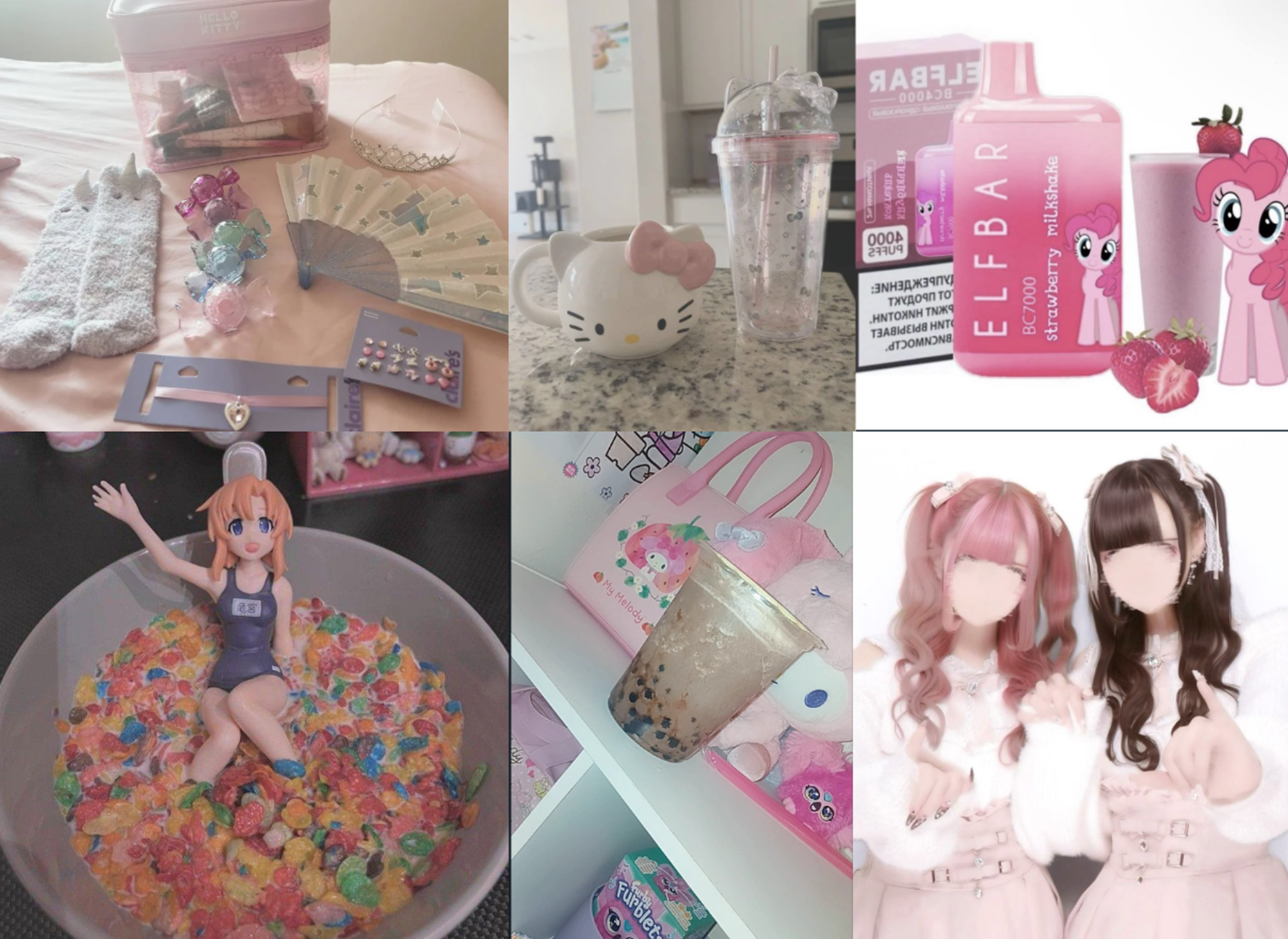
In the context of the Com Network usage, cutecore signifies a distinct subculture or aesthetic centered around softening the sadism, self-harm and eating disorders the victims suffer from. Today, cutecore has evolved significantly and is most recognizable through its pastel colors, plush toys, kawaii merchandise, and decorations often showcased within personal, intimate spaces such as bedrooms. These are all elements that can already be found in balletcore and coquette styles. They are complemented by a mix of exaggerated femininity, childishness and nostalgia, designed specifically for a "dollettes": a naive girl who would rather revel in the lost world of childhood than live in an unsatisfying present. Its gentle, colorful, and visually comforting appearance may have mainstream appeal, however on the extreme fringes of the subcultures, the pastel and cute aesthetic stands in stark contrast to the disturbing content and behaviors it conceals within the Com Network. Within the sadistic landscape of Com, cutecore often overlaps with Sh/Ed culture (self-harm and eating disorder), suicidal ideation communities, and extreme and sadistic forms of self-generated sadistic sexual content.
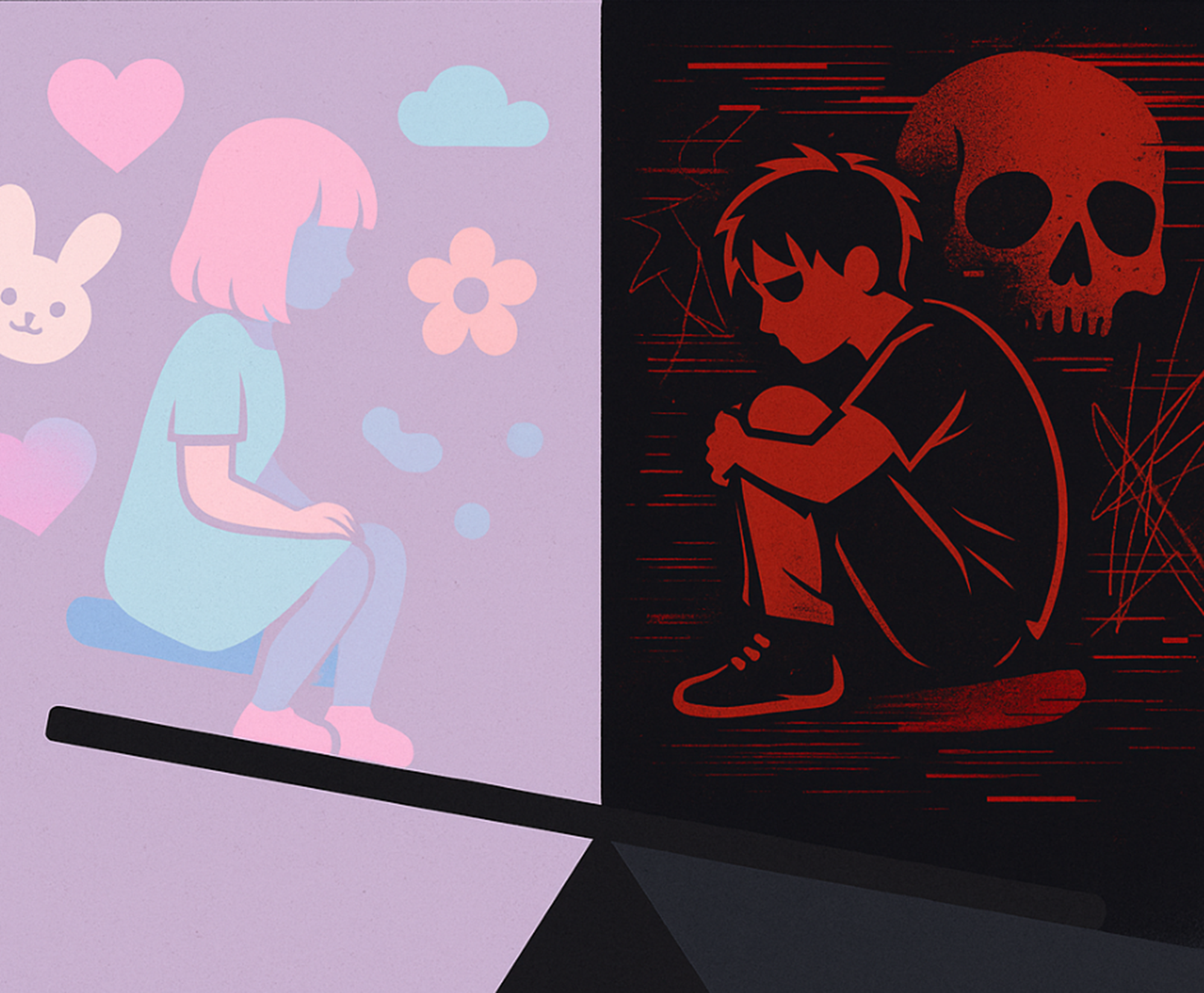
Gendered Aesthetics and Grooming Dynamics
Com-aligned Discord servers, Telegram channels, Snapchat, Instagram and TikTok accounts, feature distinct gendered roles and aesthetics—“e-boys” adopt darker, occult-like themes, whereas “e-girls” favor softer, pastel-driven visuals consistent with traditional feminine norms. This visual gender divide is crucial in facilitating online relationships, often referred to as "e-dating" or "e-romances," through which vulnerable youths are strategically manipulated and drawn deeper into extremist circles.
| Role | Visual Markers | Typical Behavioural Cues | Grooming Function |
|---|---|---|---|
| “e-boys” | Black or blood-red palettes, sigils, glitch overlays, overt occult or satanic symbols, references to gore, knives, or “void” imagery. | Edgy humour, nihilistic slogans, boasts about violence, sharing Hurtcore/Gorecore clips, doxxing raids, or “swatting” anecdotes. | Project dominance and “protector” status; lure girls with promises of safety, insider status, or romantic validation if they conform. |
| “e-girls” | Pastel pinks, baby-blue plushies, Sanrio characters, heart or sparkle filters, soft-focus selfies with bandages or visible scars. | Posting “trigger-warning” selfies, counting calories publicly, sharing secret self-harm tips, trading thinspo playlists, performing infantilised speech. | Signal vulnerability to attract e-boys’ attention; groom younger girls by normalising non suicidal self injury (NSSI), extreme dieting, and sexualised self-harm content. |
- Trust-Building Through Familiar Tropes
E-girls mimic mainstream kawaii influencers, making initial contact feel benign. Newcomers recognise the aesthetic from TikTok or Instagram and lower their guard. Parents and guardians might not see anything abnormal in their childs online behaviours - Romantic Hook
Private “e-dating” channels form quickly in Discord servers, Telegram chats, Snapchat or Instagram DMs and similar private spaces. An e-boy offers attention, digital gifts (Nitro boosts, in-game skins, Robux, Vbux, Telegram Stars), or promises of collaboration on art or music projects. They may commiserate over similar mental health issues or childhood trauma. These gestures create a fast-track intimacy that predators in Com leverage for control. - Escalation Contracts
Relationship progression is measured in escalating dares, challenges or via extortion and coersion: share a self-harm photo, restrict food intake for 48 hours, read a taboo manifesto or watch obscene gore or online child sexual exploitation. Compliance is framed as “proof of love” or commitment to the collective. - Public Display & Status
Successful acts of (s)extortion or acts of criminality are reposted in semi-private channels. Peers reward compliance with emojis, custom roles, or higher server ranks. Refusal triggers isolation, harassment, swatting, doxxing or revenge-porn threats. - Ideological Drip-Feed
A concerning trend are Cutecore girls pushing others to mobilize offline, or successfully committing acts of offline violence. Once emotional and behavioural control is established, explicit extremist content, encouraging livestreaming suicide, or calls for real-world violence begin to take place. This is part of the one-upmanship culture in com. The pastel–dark contrast normalises the shift: “cute on the outside, ‘real’ on the inside.”
Why the Gender Divide Is Effective
- Cognitive Dissonance: The stark switch from pastel softness to occult brutality disorients newcomers, blurring boundaries between play and violence.
- Asymmetric Power: Gender stereotypes (protective male, vulnerable female) mask coercion as courtship.
- Platform Blind Spots: Automated moderation may catch explicit gore faster than a plushie-filled selfie captioned “thin and pure for you 💕🔪,” allowing grooming chats from Com to operate largely undetected. (additional examples https://emojidb.org/cutecore-emojis)
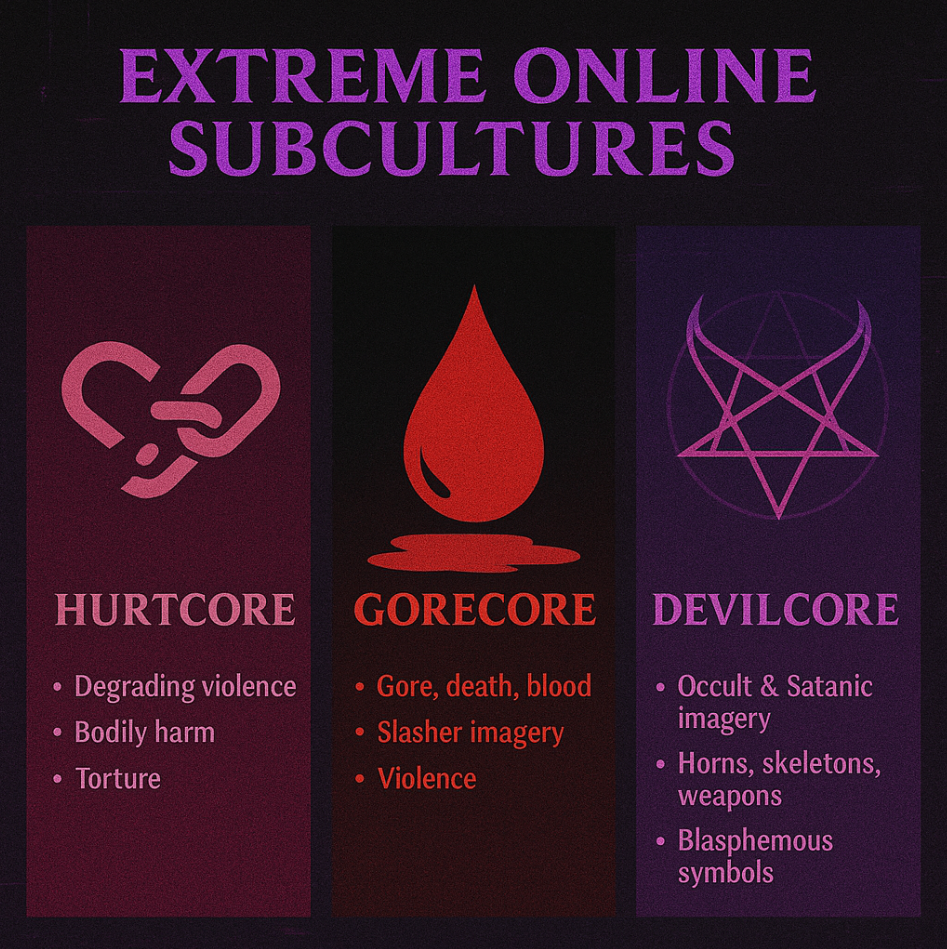
Within the Com Network, Cutecore exists alongside even more explicitly violent aesthetics such as Hurtcore, Gorecore, and Devilcore. Hurtcore, one of the most disturbing among these, revolves around extreme forms of child sexual exploitation, torture, and violence. Gorecore, similarly unsettling, features graphic visual content depicting gore, death, and murder, typically employing stark visual contrasts of red, black, and white. Devilcore incorporates occult and satanic themes with grotesque, eerie visuals that include symbols like black wings, horns, and blasphemous imagery. Collectively, these aesthetics constitute a highly dangerous ecosystem designed to desensitize and recruit youths, predominantly targeting young girls between the ages of 11 and 17.
What the science says
Scientific research on Sh/Ed culture (Mdpi, 2021; Oregon State University, 2021) identifies significant gender differences in adolescent self-harm behaviors, with girls notably more likely to engage in non-suicidal self-injury (NSSI). Girls typically use self-harm as a coping mechanism to manage overwhelming emotional distress, societal pressures, and gender-specific stressors such as intense body dissatisfaction and perfectionism, often linked directly to internalized societal expectations and standards of femininity. These behaviors frequently coexist with other comorbid mental health conditions, including anxiety disorders, clinical depression, substance abuse, and disordered eating. Girls experiencing these comorbidities are especially vulnerable, as self-harm acts as a maladaptive emotional regulation strategy, temporarily alleviating intense feelings of anxiety, hopelessness, shame, or psychological pain associated with perceived failures to meet idealized standards of beauty, behavior, or academic performance.
Exposure to online content depicting or glorifying self-harm significantly amplifies these risks. Adolescents who frequently encounter online self-harm images, narratives, or discussions that normalize NSSI are more likely to imitate these behaviors, particularly among female adolescents already struggling with comorbid conditions such as depression and eating disorders. Digital ecosystems, like those within Cutecore subcultures, actively promote a distorted perception of mental health, framing severe psychological distress and associated comorbidities as desirable indicators of authenticity. Mental health struggles—including severe depression, anxiety disorders, eating disorders, substance abuse, and self-harm behaviors—are explicitly celebrated within these online communities, creating perverse incentives for adolescents to escalate harmful behaviors. In such contexts, individuals frequently display multiple comorbid mental health issues simultaneously, magnifying their vulnerability and potential for exploitation.
Within these toxic digital spaces, girls encourage or actively coerce one another to engage in increasingly severe acts of NSSI, frequently leveraging manipulation techniques such as emotional blackmail, public shaming, or threats of exclusion. Interactions may quickly escalate from mild encouragement of self-harm to explicit incitement toward suicidal ideation or acts. Adolescents already dealing with comorbidities such as depression, anxiety, eating disorders, or substance abuse find their symptoms intensified by this environment. The pressure to visibly and publicly demonstrate distress through acts of self-injury becomes overpowering, leading to worsening psychological states and escalating self-destructive behavior.
Furthermore, the severity and visibility of mental health issues and comorbidities explicitly function as social currency within these subcultures. Individuals displaying more pronounced psychological distress—manifested through severe depression, visibly deeper self-harm scars, dangerously restrictive eating behaviors, or chronic substance abuse—gain higher social status and peer recognition. Such a dynamic establishes a perverse hierarchy based upon the intensity and multiplicity of these comorbid conditions, further reinforcing a competitive culture of self-destructive behavior. Adolescents begin to perceive that the path to acceptance, validation, and social standing within these communities depends upon actively worsening their own mental health, thus exacerbating existing comorbidities and deepening their psychological dependency on these harmful online ecosystems.
The Camouflage of Violence
Cutecore camouflages violence. Its success lies in normalize otherwise shocking and harmful behaviors such as sexual violence, self-harm, and eating disorders. By packaging these disturbing behaviors within aesthetically pleasing visuals, extremist content creators effectively camouflage their true nature. This subterfuge makes violent and harmful content significantly more palatable to impressionable youth, enabling its spread across mainstream social media platforms without triggering traditional moderation alarms.
Cutecore’s power rests on a single trick: wrapping graphic harm in a sugar-coated wrapper. It is part accidental aesthetic (part of the existing gender segregation online) choice and part deliberate operational tactic (weaponized by those who become predatory victimizers) that exploits how social platforms rank and moderate content.
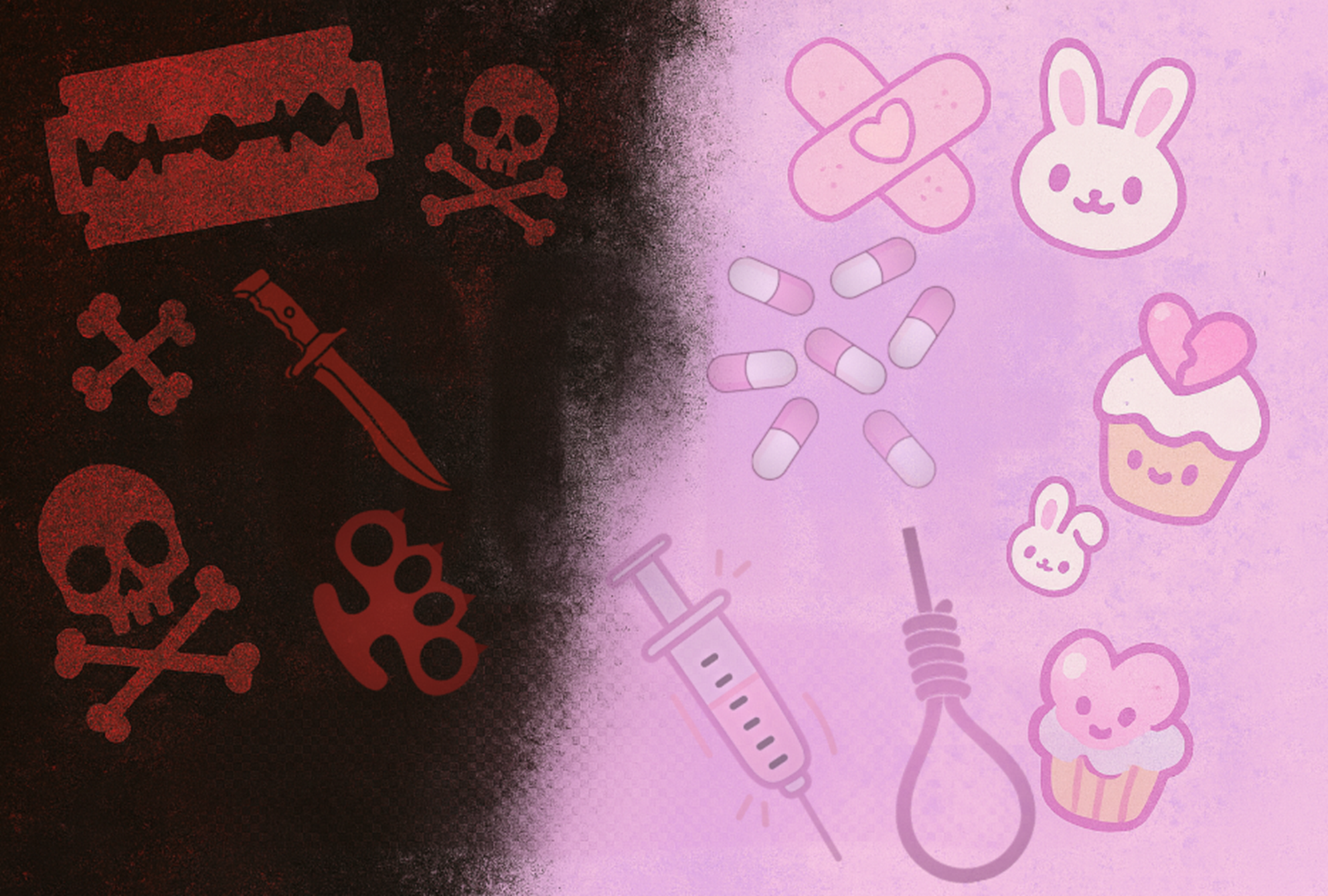
- Visual Sugar-Coating
- Colour Palette: Soft pinks, baby-blue gradients, and glitter overlays dampen the visceral impact of blood splatters, razor blades, or bruises. The resulting image registers as “cute lifestyle” rather than self-harm or sexual violence.
- Icon Smuggling: A Sanrio sticker can be placed over a cut to turn a wound into a playful “accessory.” Content-scanning AI often tags this as fan art or fashion, not NSSI.
- Narrative Layering
- Progressive Disclosure: Posts start with benign hauls of plushies or kawaii make-up. Over days the same feed introduces “thinspo,” subtle scar pics, then explicit gore. The slow gradient prevents sudden user drop-off and avoids automated spike detection.
- Humour and Irony: Memes invite viewers to laugh at or trivialise violence (“stabby vibes ✨🔪”). Humour reframes brutality as edgy self-expression, lowering emotional barriers.
- Coded Language and Hashtags
- Algospeak: dodges keyword filters.
- Emoji Chains: A string of 🍓🩸🧸 signals “blood play” without explicit wording. Moderation bots miss the semantic context.
- Algorithm Gaming
- Looped Micro-clips: Ten-second “aesthetic edits” pair pastel scenes with half-second flashes of gore, too short for hash-matching algorithms yet long enough for human viewers to register.
- Engagement Bait: Users are prompted to “double-tap if you relate” or “DM for the uncropped pic,” driving interaction metrics that boost ranking in TikTok or Instagram Reels.
- Cross-Platform Funnel
- Soft Front Door: Public TikTok accounts tease mild content. Bios contain Linktree-style redirects to Discord, Telegram, or private Twitter circles where unfiltered Hurtcore and Devilcore material is shared.
- Ephemeral Messaging: Self-destructing stories on Snapchat or Instagram Close Friends host the most explicit images, ensuring evidence disappears before it can be reported.
- Status Economy
- Scar Showcases: High-resolution scar selfies posted next to plush toys earn the most likes, reinforcing a cycle where more severe injury equals higher social capital.
- Challenge Chains: “Cuties’ challenges” ask participants to match or top previous acts of NSSI, escalating risk yet masked by cute layouts and soft music.
- Moderation Blind Spots
- Focus on Text, Not Context: Most automated systems rely on text or high-contrast gore detection. Pastel filters desaturate reds and blur edges, slipping under threshold scores.
- Benign Surface Signals: Large volumes of teddy-bear and heart emojis flag content as PG-13. Humans scanning thumbnails may overlook the hidden blade or ligature.
The result is a Trojan horse: content that looks wholesome at first glance yet drip-feeds viewers sexual violence, self-harm techniques, and pro-eating-disorder messaging. By the time a new recruit recognises the full intent, the aesthetic has normalised these harms, and the user is already embedded in private channels where moderation cannot easily reach.
The strategic effectiveness of Cutecore in recruitment stems from its ability to circumvent traditional prevention methods. Extremist groups intentionally exploit familiar mainstream aesthetics to reach vulnerable youths without immediate suspicion from parents, educators, or security professionals. This deceptive visual strategy lowers psychological resistance to harmful behaviors, allowing extremist ideologies to become normalized and accepted incrementally.
Psychological Comorbidities: Appeal, Manipulation and Exploitation
Cutecore’s appeal is deeply psychological, resonating profoundly with adolescents navigating critical phases of identity formation. Young people experiencing isolation, loneliness, depression, anxiety, or body dissatisfaction often find solace and validation within visually appealing subcultures such as Cutecore. Recruiters within these communities exploit emotional vulnerabilities by offering acceptance, community, and a sense of identity. This manipulation creates powerful psychological dependencies, further complicating intervention and deradicalization efforts by professionals.
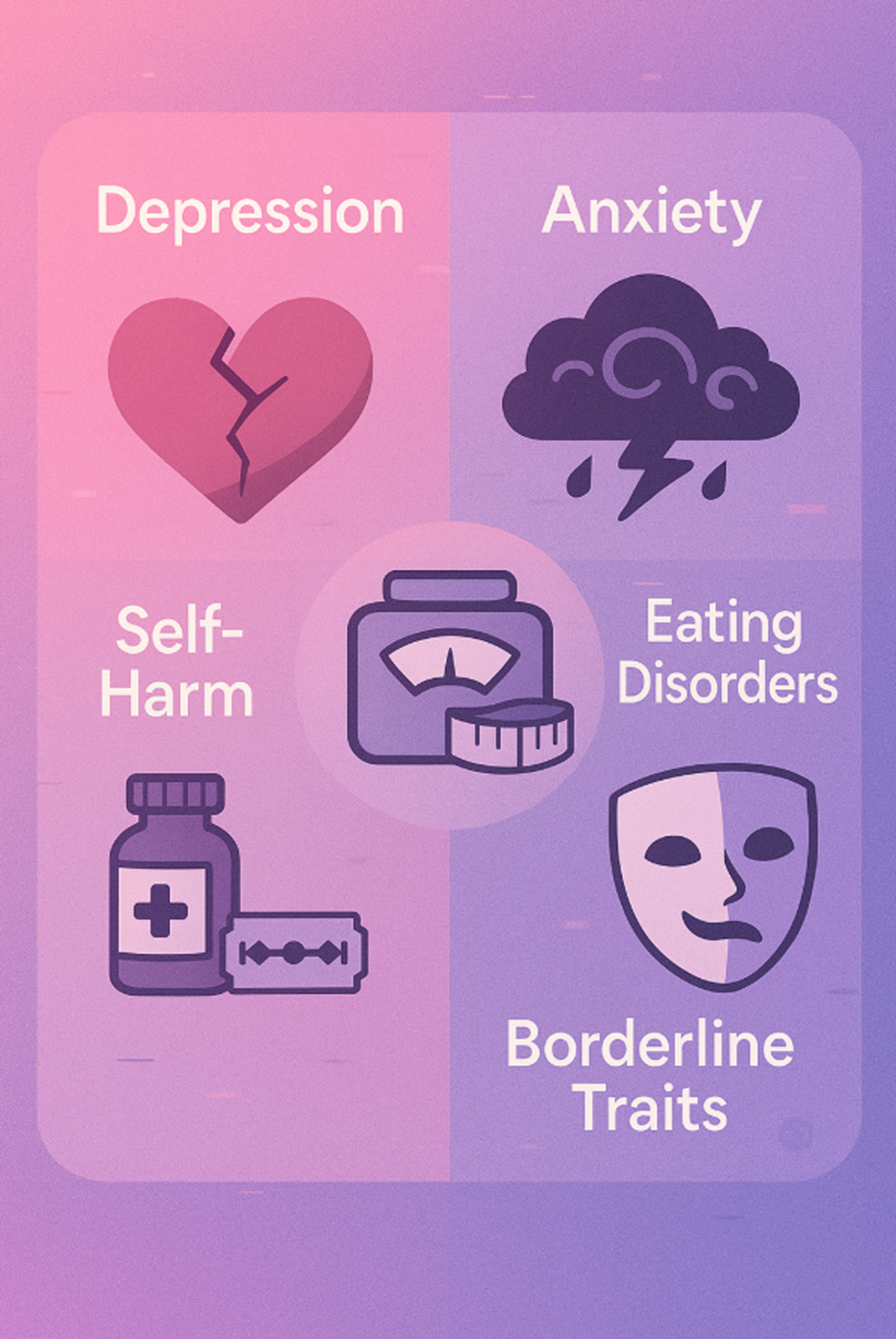
Moreover, within the Cutecore ecosystem minor girls actively exploit and exacerbate existing mental health vulnerabilities, including self-harm, eating disorders, substance abuse, and other comorbidities to succesfully victimize other minor girls in the milieu. Individuals who are targeted typically exhibit traits like perfectionism, susceptibility to peer pressure, and harsh self-criticism which makes them particularly susceptible to recruitment and manipulation. The normalization of harmful behaviors—such as prominently showcasing scars from self-harm as status symbols—fosters a competitive culture of self-destructive actions, further deepening emotional and psychological dependencies.
This subculture also features a distinct "sh/ed culture" (self-harm/eating disorder culture) that blends emotional support with harmful practices. Within these online spaces, self-harm and disordered eating behaviors are actively validated and encouraged through coded language, including terms like "thinspo" (thin inspiration), "bonespo" (bone inspiration), and "algospeak," strategically designed to evade moderation efforts, while developping in-group language and aesthetics. Such environments act as echo chambers, amplifying harmful behaviors and driving users further into destructive patterns. On platforms where there is less moderation, like Telegram, girls in the Com network curate personal channels (that functional similarly to an Instagram oage or Tumblr blog) where they promote their self-harm content, drug use, personal narratives and stories, and their self-generated online sexually explicit content. At times some of the girls in these milieus will "sell" their content for Telegram stars, Robux/Vbux, UberEats/Doordash credits, or crypto. There is an underground market for self-generated or extorted content in the cutecore milieus.
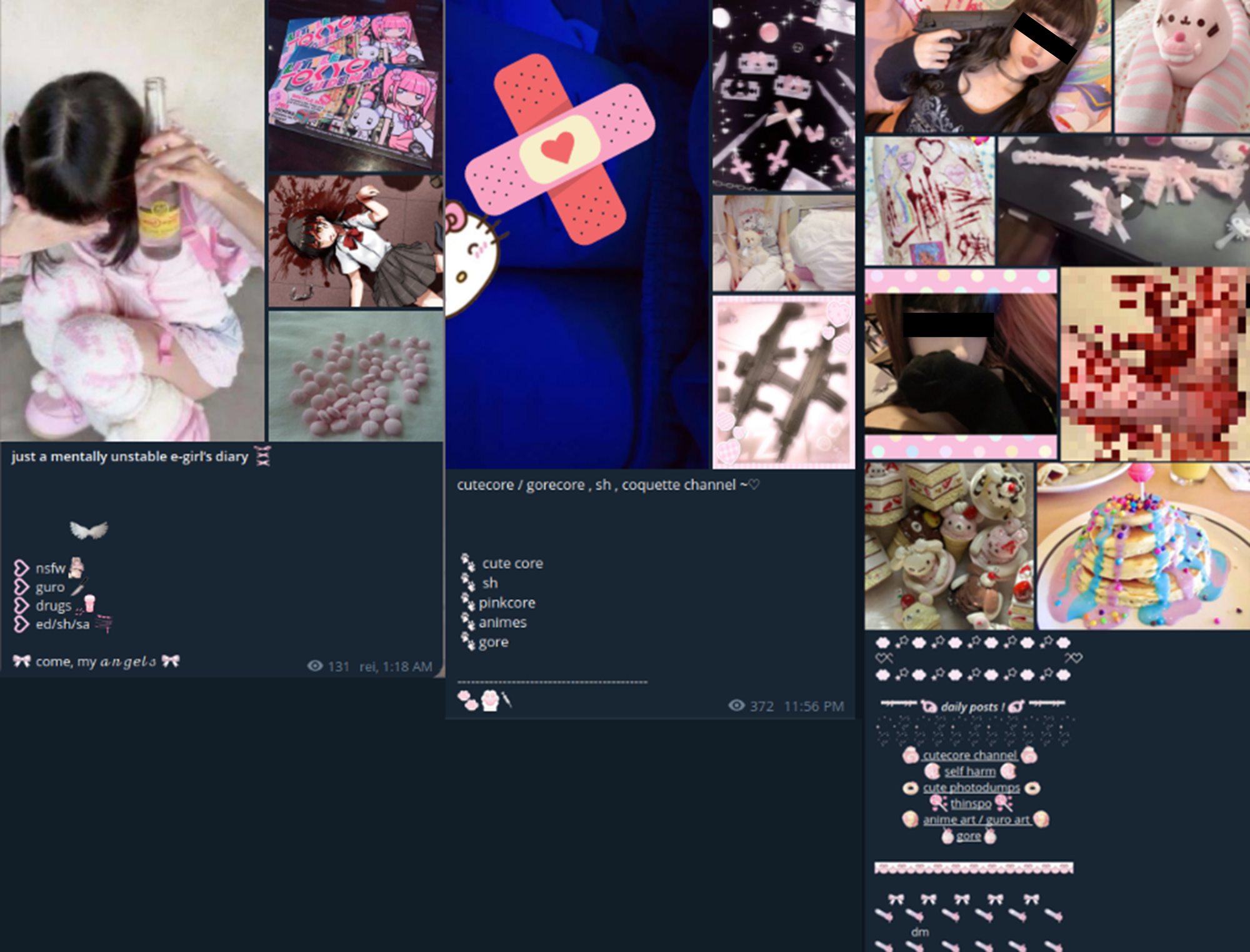
Recent academic research from Universidad Rey Juan Carlos highlights Cutecore’s deeper aesthetic strategies. Posts often blended kawaii or “corrupted‑childhood” visuals (e.g., plush toys, pastel filters) with images of cuts, bandages and thinspo captions—an aesthetic overlap with Cutecore/Traumacore. This aesthetic subverts childhood imagery like cartoons or toys with glitch effects, blood splatters, and horror overlays to evoke a visceral sense of unsettling nostalgia and trauma. These design techniques create cognitive dissonance: the familiar is warped into the grotesque, bypassing users’ emotional defenses and subtly embedding extremist content. TikTok comment sections framed instances of self-harm and periods of relapse as “proof of authenticity,” while mutual encouragement to “level up” injuries echoed the status driven economy dynamic inside Cutecore milieus. Roughly half the analysed posts referenced eating‑disorder behaviours or depressive ideation, underscoring the comorbidities between non-suicidal self-injury, eating-disorders and mood disorders present in cutecore communities.
Real-World Tragedies
These dynamics are not merely theoretical but have had severe real-world consequences. On July 3, 2025 in Rio de Janeiro, a 14‑year‑old boy waited until his parents were asleep, then shot his father, mother, and three‑year‑old brother in the head. He dragged the bodies to the backyard, dumped them in a well, and meticulously cleaned the crime scene. When his grandmother later asked about the family, he claimed his parents had taken the toddler to a doctor. Police soon discovered he had not acted alone: the killings were livestreamed on Discord for a 15‑year‑old girl who had been his online girlfriend for six years. Investigative group Stop Hate Brazil reports that the girl, active in the Cutecore milieu, first met the boy on Roblox and continued the relationship on Discord. Chat logs show she provided step‑by‑step instructions for the murders and even suggested dismembering the bodies or feeding them to pigs. After the killings, she messaged that she had never imagined anyone would commit such an act out of love for her.
On 17 December 2024 in Natal, Brazil, a 19‑year‑old girl immersed in the Com Network’s Cutecore milieu plotted to kill her younger brother and stage a school massacre. According to Stop Hate Brazil, she had already broadcast her cruelty on Discord, livestreaming zoosadism by placing a cat in a blender. The plan escalated when she brought a firearm to school: she shot an 18‑year‑old classmate in the head—who survived—and then attempted to kill a teacher but failed.
These cases emphasize the critical and urgent need for counter-terrorism professionals, prevention practitioners, parents, teachers and frontline practitioner to understand and address the subtleties of fandoms and subcultures. Recognizing and responding effectively to these deceptive aesthetics requires updated strategies, informed cross-disciplinary cooperation, and comprehensive prevention frameworks.