Mascots of Mayhem: Original Characters as Extremist Tradecraft


Within violent extremist milieus, fictitious and original characters allow individuals to construct detailed personal identities explicitly aligned with ideological narratives. These characters are intentionally crafted to embody specific extremist symbolism e.g. nihilistic violence, militant discipline, or martyrdom fantasies. Within nihilistic violent extremist ecosystems, individuals meticulously develop and maintain their personas; original characters are cultural knowledge by-products that go beyond indicating insider-status. Some community members effectively cultivate a personal brand that signals emulation of these memetic characters violent tendencies and personalities. This branding not only bolsters their individual standing within a milieu but also shapes perceptions of credibility and authority within the community.
Furthermore, these fictitious characters by a community enhances emotional and psychological investment to community members who engage in the character development. Collaborative storytelling online gamifies radicalization: communities reward members who escalate plots, driving a contest of ever‑harder actions. Fictional narratives “transport” audiences and foster identification with violent protagonists, suppressing critical scrutiny and boosting persuasive power. This is not new to the national security space, the fictitious narrative and characters from the Turner Diaries have been credited with inspiring in part Timothy McVeigh. Gamification of violent extremist narratives provide users with an imaginative conduit for deep immersion with the worldview of the network. Role‑play and performance lets violent extremists rehearse their identities in a low‑risk arena, making real‑world violence feel like the next logical scene. For as those who participate in the group play of character development, increasingly identify with their characters, the boundaries between their personal identities and violent extremist personas blur, internalizing radical beliefs and normalizing violent or harmful behaviors. The entertainment frame hides propaganda in engaging stories, recasting violent acts as heroic quests rather than moral transgressions. That is why original characters serve as central elements in NVE storytelling and propaganda dissemination. Repetition of these stories and performances gradually fuses fantasy with self‑concept, as they dramatize and illustrate sadistic ideations, violence, and martyrdom in engaging and relatable narratives. Such storytelling techniques normalize violent acts, making them more palatable and aspirational.
These memetic mascots serve critical cultural roles in the media creation of the fandoms and subcultures of violent extremist spaces, as they become central figures around which powerful stories and mythologies are constructed. Through these characters, extremist narratives become personalized, engaging, and relatable, significantly enhancing propaganda effectiveness. Entire cultural products are created from them, they facilitate a secret language and knowledge available only to insiders, and are meant to make outsiders fall for the trap of taking things literally and at face value. Moreover, within these ecosystems, fiction and characters function as key drivers of social competition and hierarchical structuring. Community members consistently strive to create increasingly extreme, ideologically authentic, or culturally resonant version of these characters. This competitive dynamic propels community members toward escalating expressions of violence. The one upmanship culture of nihilistic violent extremist milieus, provide a proving ground where community members will seek to make reality the fictitious traits and crimes committed by a fictitious character, as that character is the ultimate community member.
Ultimately these characters and fictious narratives reduce friction created by some protective factors by providing relatable, approachable gateways for newcomers. Characters are designed to resonate emotionally with individuals experiencing social isolation, alienation, or existential crises, subtly embedding extremist concepts within accessible narrative frameworks. By reducing ideological barriers through relatable storytelling, these characters make the journey into violent acts incremental, appealing, and difficult to detect or interrupt. They significantly enhance communal cohesion and solidify a collective cultural identity as the shared process of creating, refining, and interacting through the original characters strengthens group bonds and loyalty. These characters become central to community rituals, internal language, meme culture, humor, and historical narratives. These characters are from an analytical perspective a cultural artifact integral to subcultural identities and longevity.
Original Characters
The Original Characters from the latest NLM roster
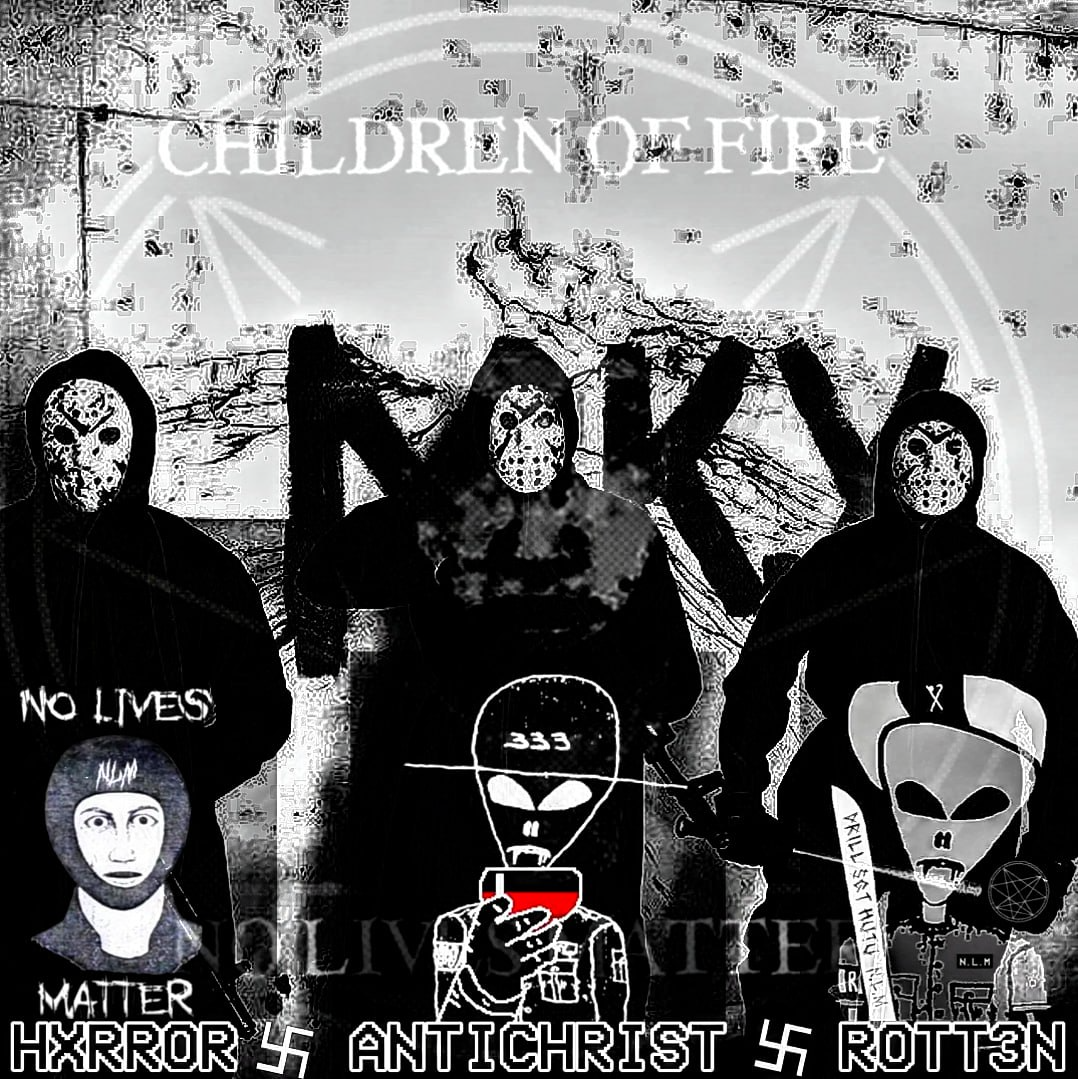
No lives Matter in may published a leadership roster that featured three original characters: the NLM Night Stalker, Drill Sgt. Grey and Drill Sgt. Hutu in an instructional guide on how to make homemade grenades.
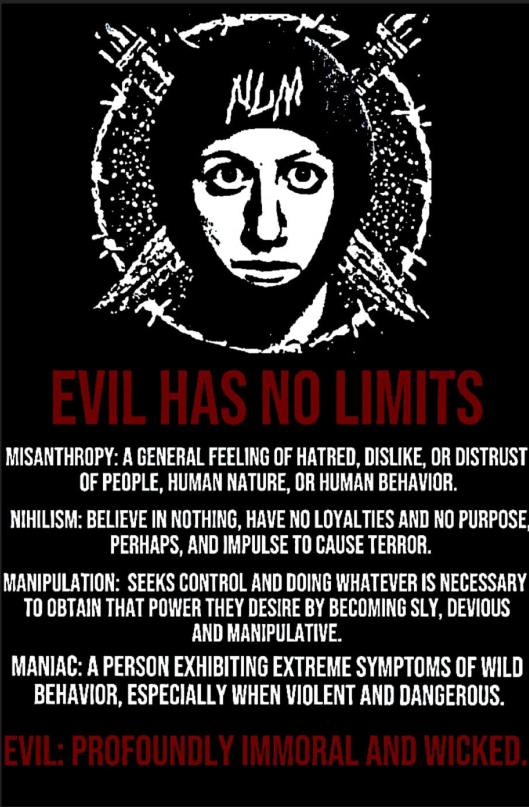
NLM Night Stalker
The NLM mascot is based on one of the composite sketches of the "East Area Rapist" a.k.a. the Night Stalker a.k.a Joseph James DeAngelo, who between 1974 and 1986 committed 13 murders, 51 rapes, and 120 burglaries across California. Like other original characters the use of the "Night Stalker" represents both an avatar for individuals to take upon themselves, as well as a role model to emulate: indiscriminate random acts of criminality, murder and rape. In almost all of the No Lives Matter manifesto and instructional guides, the authors makes reference to this quote representative of their beliefs:
We are the children of fire, we are the opposition of the chosen one, our one and only task is to kill the mundane in any dimension we get deployed in this instance it is planet earth
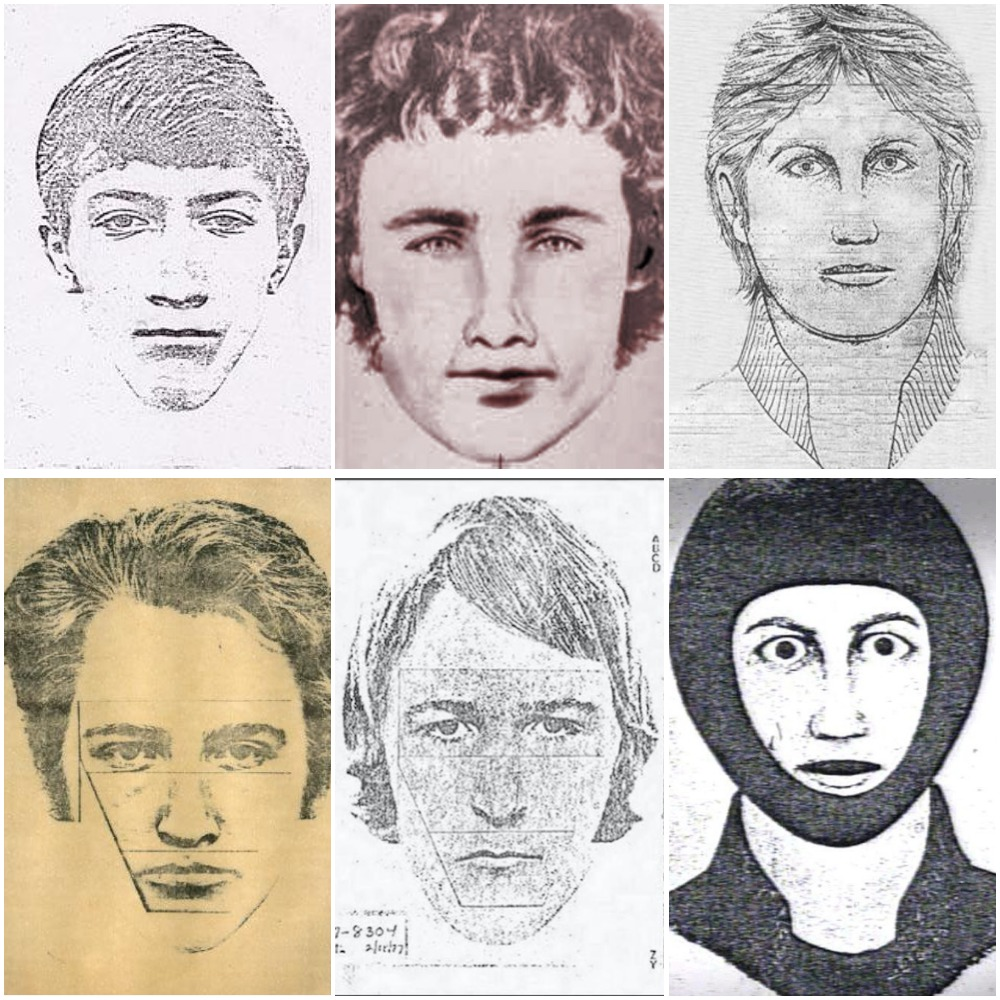
The mascot for NLM is less of a character of fiction, as we will see with Drill Sgt. Grey. But the traits of a serial killer, of a mass murderer, a rapist, a school shooter, a terrorist, a maniac that is what they seek in a character trait for a recruit. Within the night stalker is found the types of crimes a recruit must commit to join NLM sadistic sexual violence and murder. Serial killers, serial rapists, school shooters, cannibals, the "Saints" (famous mass shooters), become the heroes of the children in violent extremists milieus, the same way I grew up idolizing my favorite hockey player and author. The trait and personalities of the violent extremists that are mimetically transformed into characters and propaganda, become the traits those in the milieus will take on and emulate, as that is what has become normative to the in-group.
Drill Sergeant Grey
He is a grim, grey alien with large, almond-shaped eyes and a small, skeletal figure (which is in contrast to his over-sized head.) He wears a Drill Sgt. Uniform (including a large, harsh brimmed hat with the numeric 333 emblazoned on the front, military pants tucked into boots and a military battle-ready logistical jacket emblazoned with the numeric '333 and on which is pinned an insignia of the nine Angles, a patch bearing the sigil of the TOB and upon the collar-tab epaulets is the number '333' - the latter which appears on both of his thin, starved shoulders.) He wears a black armband with the large white letters sewn onto the clothes bearing the initials "VVM". His mouth is only a slit which never smiles. From his mouth emanates only HATE because he hates you he wants to DISCIPLINE you, he wants to PUNISH you he wants to push you over the brink so that you fall - like chaff - into the blaze of the ABYSS, the blaze of TORTURE, the blaze of DISCIPLINE.
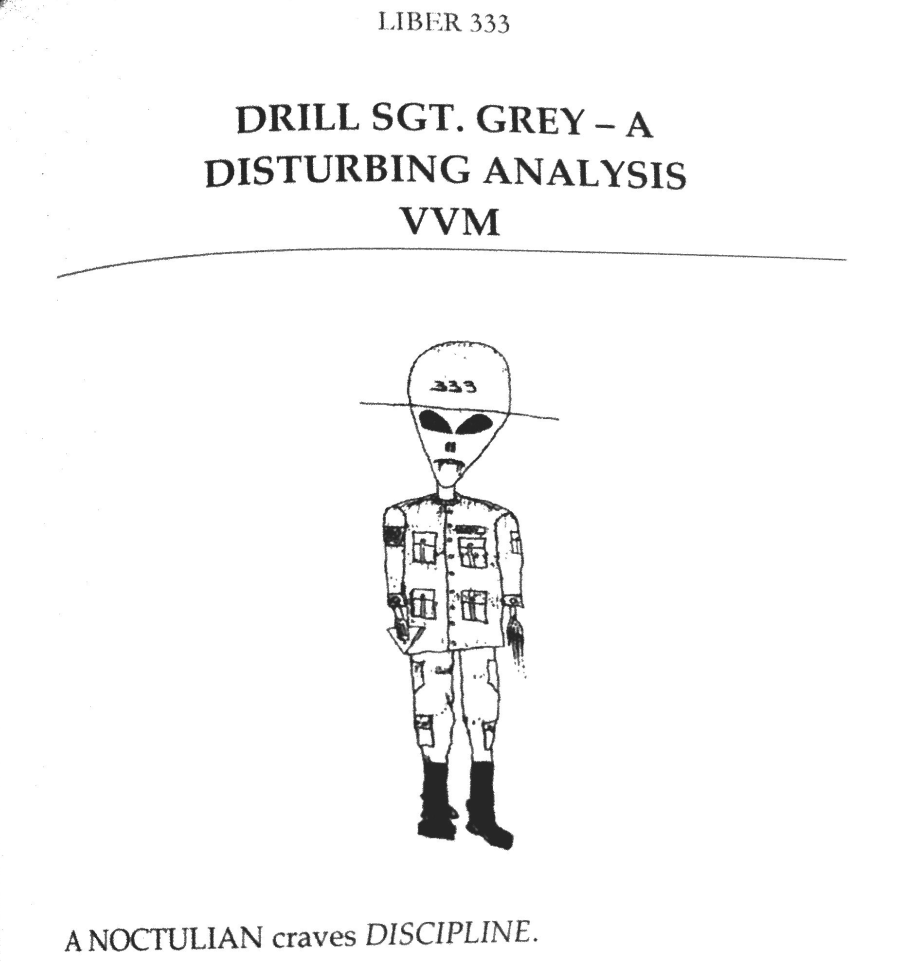
According to documentation, Drill Sgt Grey first appeared in Temple ov Blood publications (Liber 333, Issues of False Prophet, and the defunct Blood Tempel website) as both a hand drawn character, and with posts about the "lore" of Drill Sgt. Grey. In Liber 333 Drill Sgt Grey was introduced as the leader of the Velton Vindex Movement. He is a harsh and cruel noctulian leader who craves discipline, speaks in short, punctation-free sentences, he hates "you" and wants to push "you" to the brink with his strict and intimidating tone, using his wooden punishment paddle and cat o' nine tails to enforce his twisted brand of love and discipline.
The uniform, triple “333” numerals, Tempel ov Blood sigil, and Nine Angles patch create a ready visual shorthand that encodes ideological alignment and screens for insider recognition. By presenting discipline as punishment for insufficient transgression—by not being bad sinister enough—the character flips normative ethics: harm becomes proof of commitment, and sadism becomes a teaching method. This inversion lowers psychological barriers to real violence by reframing pain as a transformative rite demanded by the movement’s cosmology. The alien form reinforces separation from ordinary humanity, inviting adherents to shed empathy and adopt a post‑human self‑conception aligned with “Noctulian” ideals. Verbal abuse, forced exercise, and ritualised beating provide clear scripts for user interaction, giving community members content to emulate in memes, role‑play, and offline hazing. Because Drill Sgt Grey is fictional, individuals in extremist milieus can perform the persona across multiple accounts, maintaining anonymity while projecting a consistent authoritative voice that polices ideological purity and enforces group hierarchy. In sum, the character functions as a branding asset, recruitment hook, and behavioural template that normalises brutality, binds followers through shared symbolic language, and nudges them toward escalating extremist action.
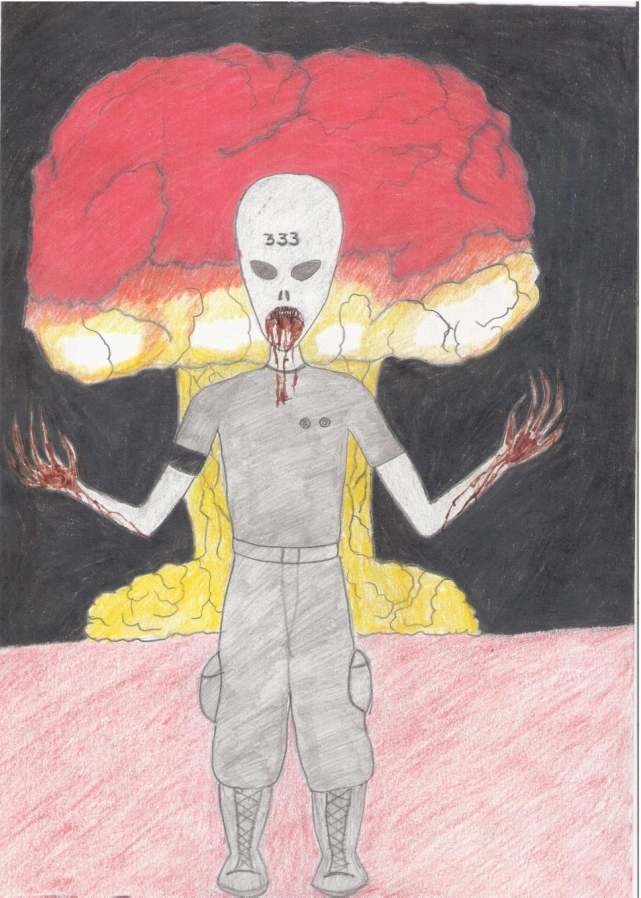
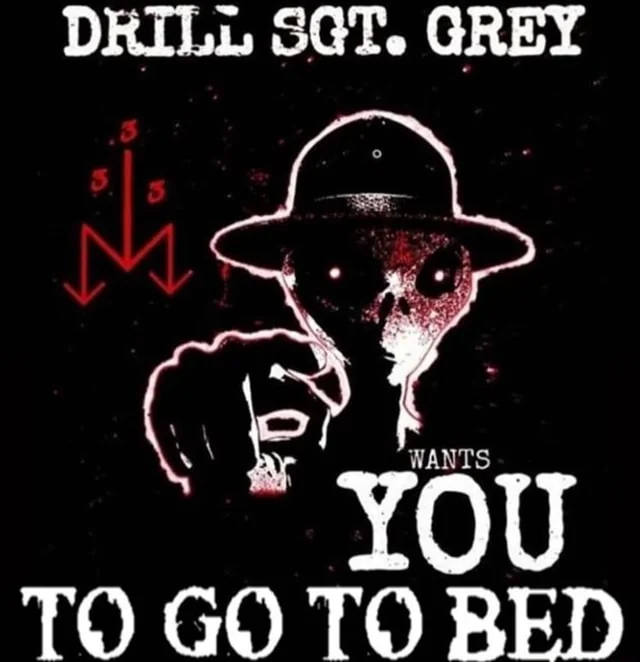
Quote from False Prophet: "This work was created to provide the vampire further Gateways with which to open the Nexion leading to that acausal blackened essence which makes us what we are. Drill Sgt. Grey, Awake!"
What is important to remember is that nihilistic violent extremists want to embed themselves in digital spaces, where they can corrupt at risk individuals and urging them toward the indiscriminate chaos and violence. They weaponize memes and gore to dull empathy and make violence feel inevitable.
Ultimately, an original character can either play a surrogate role for members, whereby their violence is made manifest through the memetic character or the character gives members a supernatural mandate to carry out acts of violence. In one issue of False Prophet, for example, an initiate recounts their experience of the Temple ov Blood, "Trauma Induced Programming", at the inflection point of that process the initiate claims that Drill Sgt. Grey came to them formally showing his interest in them. This movement ascribed to the original character, a supernatural role, which gives the initiate an other world mandate to carry out the mandate of Tempel ov Blood.
Drill Sergeant Hutu
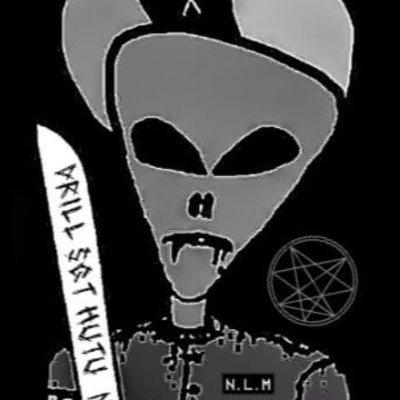
Some memetic characters are birthed as a result of a mass casualty incident, where the event or threat actor, has lead to the creation of a culturally significant meme for a milieu. An example of this is the creation of Drill Sgt. Hutu following the Antioch Highschool shooting by Solomon Henderson. Drill Sgt. Hutu is an original character, which was very likely created by Skibidi Farms founder Klaask. Following the attack Skibidi Farm members and their network started posting memes with the face of Solomon Henderson that was copy and pasted onto the head of rebel soldiers lead by Laurent Nkunda in the Congo following the '94 exodus out of Rwanda. (Nkuda is a Congolese Tutsi not a Hutu.) Either way, the memetic reaction to the Antioch school shooting, was this meme about the Rwanda Genocide.
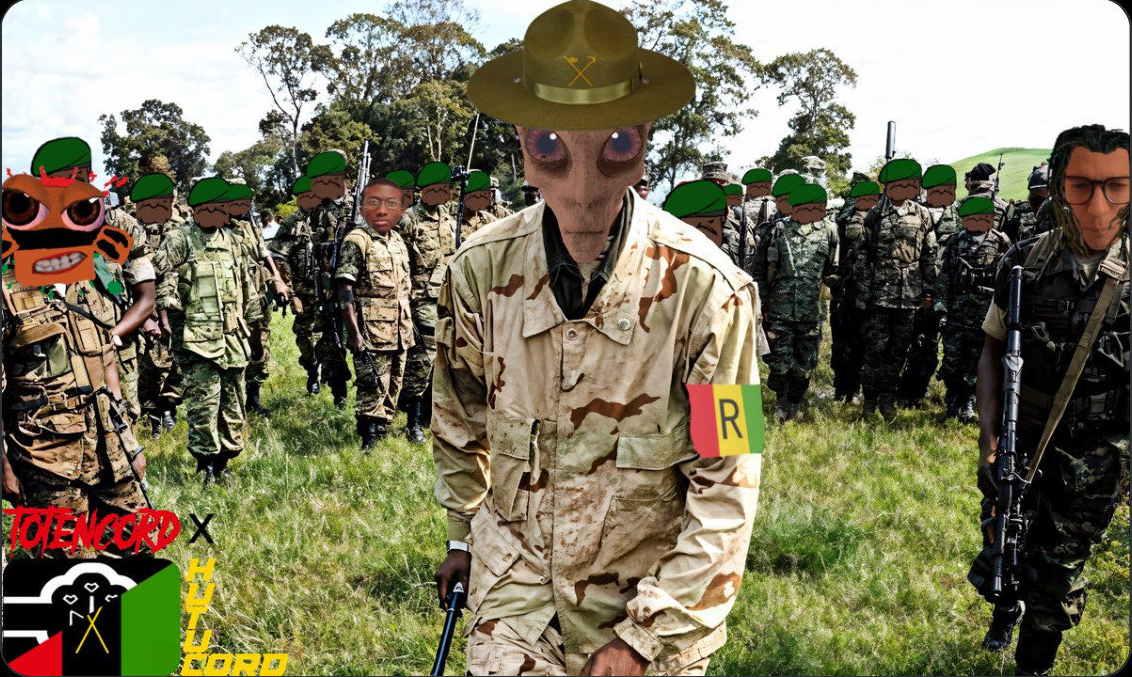
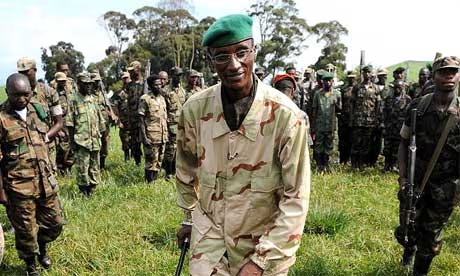
At the head of the army of Henderson's is the original character of Drill Sgt. Hutu. The link to the Rwandan genocide plays on Solomon Henderson identifying with National Socialism and self-hatred towards his racial identity in his manifesto. Drill Sgt. Hutu is the racialized version of Drill Sgt. Grey. However, the community did not stop at creating a meme and an character, but they also established digital architecture on X, Matrix, Telegram, Discord, Tumblr and Skibidi Farms related to this memetic concept. The main accounts on these platforms are "Hutucord" and "Hutu Power Radio", borrowing the logo Radio Télévision Libre des Mille Collines and coopting it for amplifying Skibidi Farms and No Lives Matter propaganda. Hutucord has become the branding for Klassk on Skibidi Farm, and Drill Sgt. Hutu appears in the latest propaganda and guides from NLM leadership.
Similar to Drill Sgt. Grey, the Drill Sgt. Hutu play a propagandistic and memetic role, as well as to exemplify the type of genocidal and nihilistic violence that NLM and Skbidi Farms are promoting. This memetic mascot represents the continuation of the Tempel ov Blood character, within the context of a new generation of violent individuals. Both characters represent the chaotic and nihilistic desire to obliterate all that lives, and becomes an example that members should seek to emulate when they become part of NLM.
Other Original Characters
Noctulian Freakybob
Noctulian FreakyBob—frequently abbreviated “FreakyBob” or rendered as the more explicit “FreakRapeBob”—constitutes nihilistic violent extremist network’s most plastic and adaptive original character, a memetic chimera in which children’s animation, racial animus, and occult accelerationism are compressed into a single, infinitely replicable asset. The genealogy of this character begins with 2010‑era surveillance stills of a convenience‑store robber wearing a SpongeBob SquarePants mask. The footage was cut up into images and turned into "edits" (images and videos) featuring O9A iconography, video footage from mass shootings then circulated as “classified evidence” of a nonexistent mass shooting against African Americans.
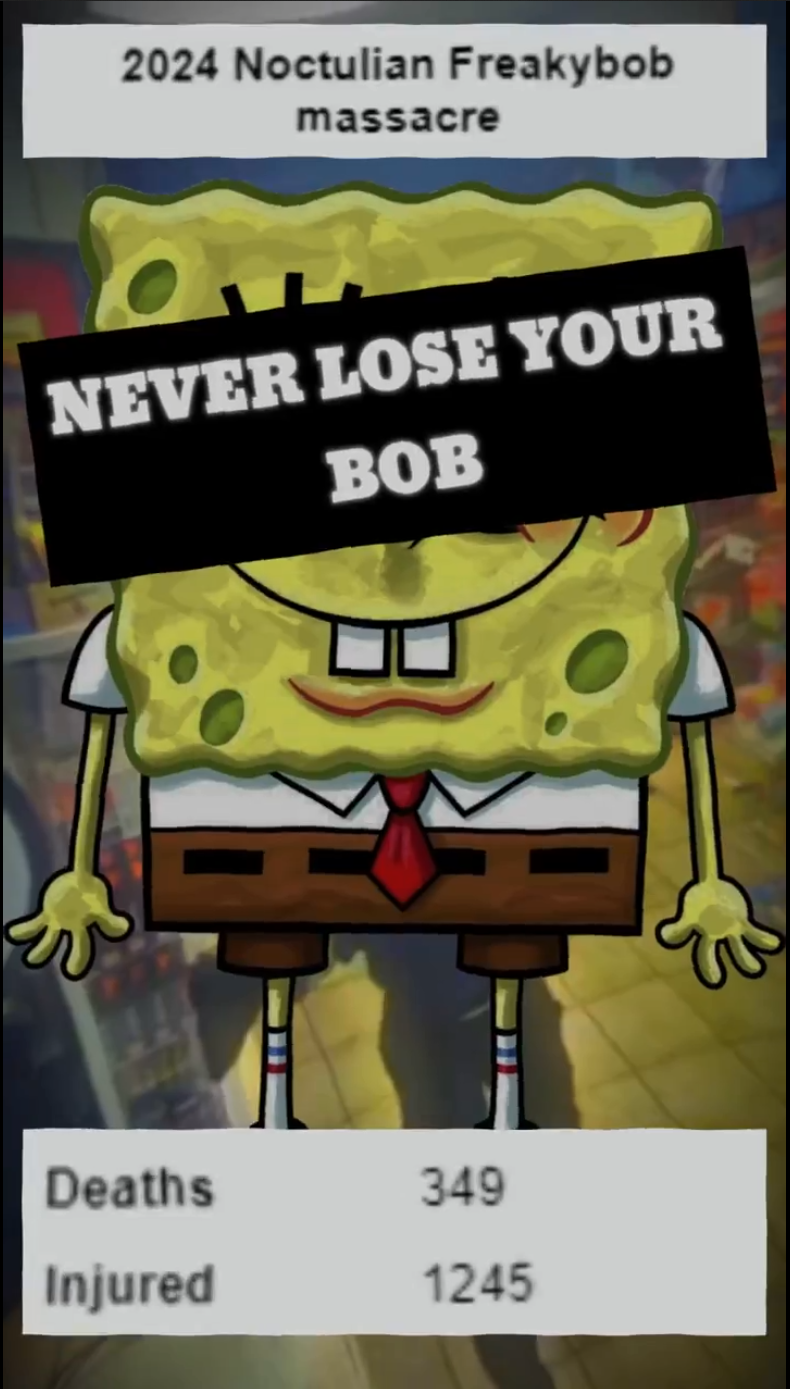
From there several other edits and propaganda has been created based on this OC. These digital assets circulate through Telegram, Matrix, 4chan, TikTok, YouTube channels such as “Spongewaffen & Tempel Ov Bob,” on VidLii, Bluesky and Reddit, serving as a shared reference point that signals insider status within the network’s nihilistic subculture. By treating fabrication as fact, propagandists secure plausible deniability—moderators and analysts see a SpongeBob meme, insiders decode a martyr narrative—while granting followers an empty vessel into which any future shooter can pour biography and grievance. Within closed channels, Noctulian FreakyBob operates as a gatekeeping shibboleth: trusted members drop modified FreakyBob frames laced with O9A and Tempel ov Blood sigils, and only those who recognise and interpret the overlays—or reply with the expected in‑group slang—are treated as authentic. Silence, delay, or misreading identifies outsiders and potential infiltrators. Parallel to Drill Sgt Grey’s militarised discipline, FreakyBob weaponises slapstick familiarity: the grotesque juxtaposition of a Nickelodeon mascot with ballistic imagery reframes homicide as absurdly doable. Because the massacre is entirely fictive, there is no ceiling of real‑world achievement; every prospective gunman is free to “author the canonical chapter” and fold his own atrocities into the mythos, ensuring perpetual narrative elasticity. By collapsing parody and prescription, FreakyBob satisfies the dual imperative of modern extremist propaganda: it maintains the ludic ambiguity necessary to evade platform policy while standardising violent scripts for rapid downstream adoption.
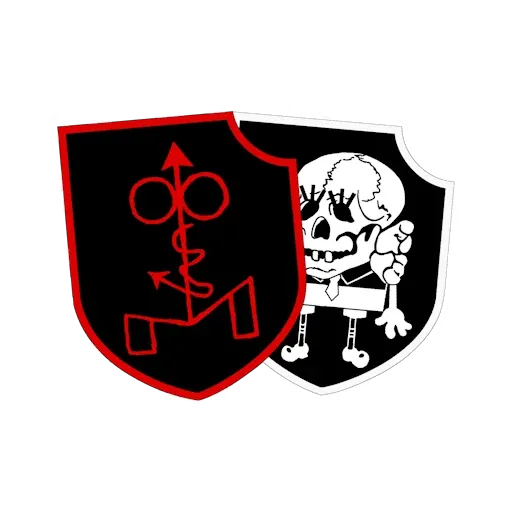
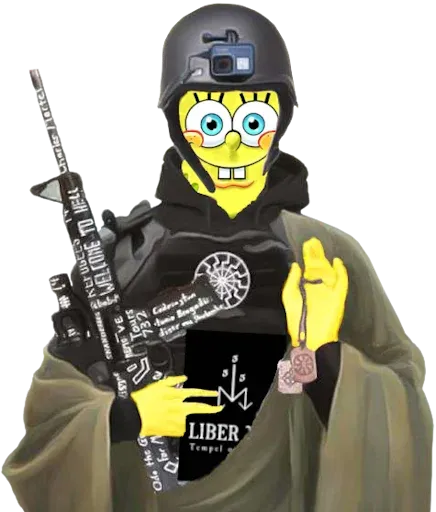
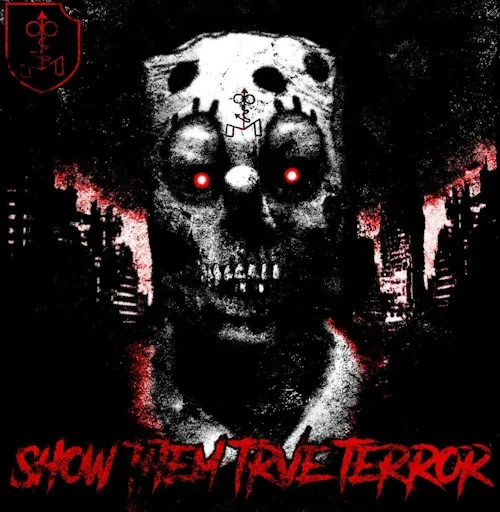
From left to right: 1) Note the creation of the FreakyBob insignia, which combines the Waffen-SSS insignia with the Temple Ov Bob sigil, making an ironic reference to Tempel ov Blood. 2) Modification of a popular "Saint Brendan Tarrant" meme, replaced with the face of SpongeBob, 3) Note the use of Terrorwave aesthetic, emulating the style created by Dark Foreigner.