True Crime Community - Fascination and Contagion & the Annunciation Church Shooting


Special thank you to Jean, Ry and Pete for their feedback, comments and criticism of this piece.
1) August 27 Incident
Sometime before 8:30 on August 27, 2025, the attacker arrived outside the Annunciation Church. Dressed in black, carrying multiple weapons and dozens of rounds of ammunition, Westman barricaded an emergency exit and fired a rifle through the church's stained glass windows. By 8:27 AM, 911 calls to the Minneapolis Police Department reported hearing a burst of gunshots.
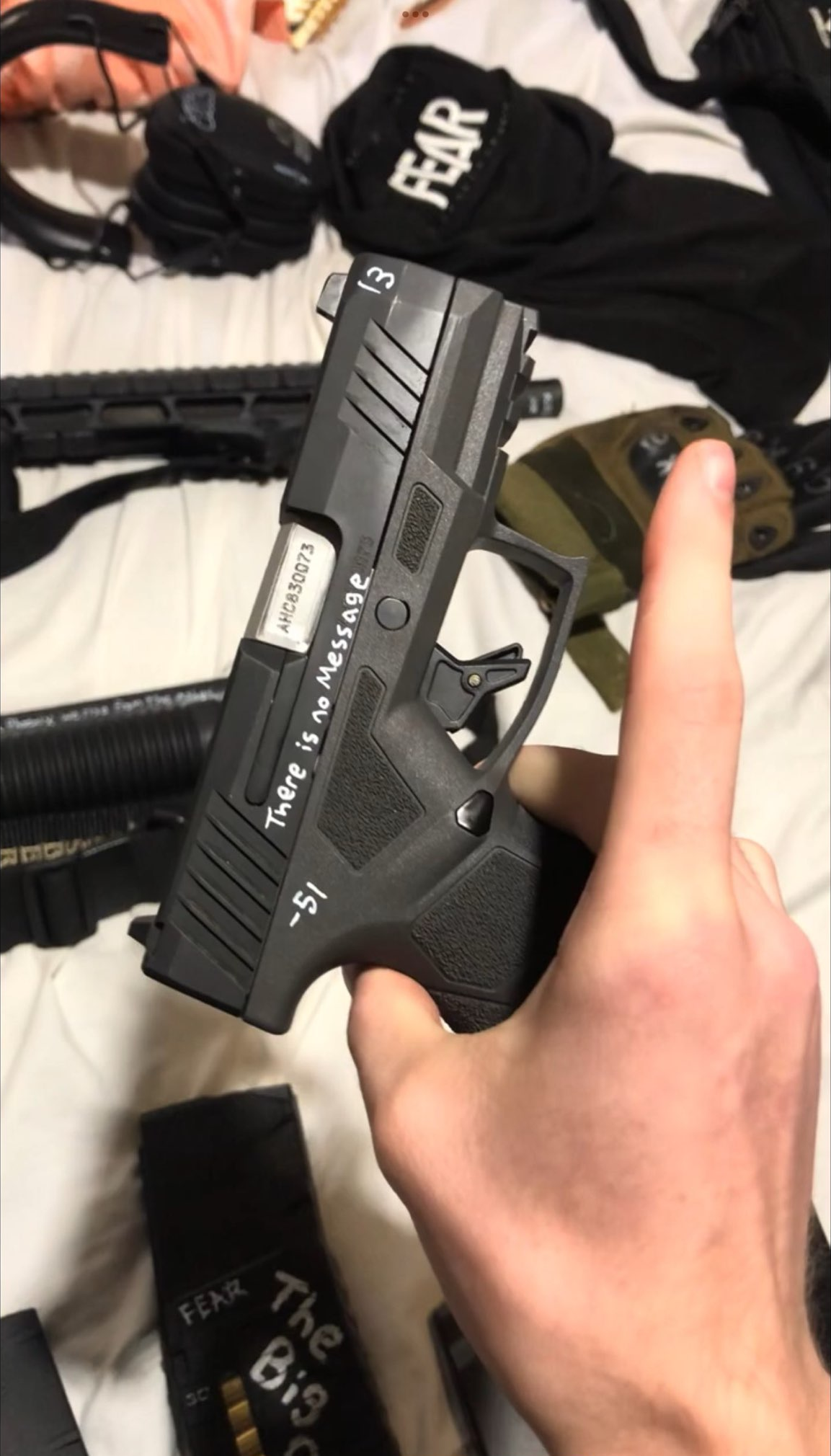
Armed with a legally purchased AR‑15‑style rifle, a 12‑gauge pump-action shotgun, and a 9 mm semi-automatic pistol, the perpetrator fired more than 100 rounds in approximately two minutes. By the end of the attack, two children were dead. Of the 18 who were injured, 15 were children between the ages of six and 15. Three adult parishioners, in their 80s at the time of the shooting, also sustained injuries. The shooter was found dead at the back of the building, in the church parking lot, reportedly by a self inflicted gunshot wound.
Leaving behind a limited social media footprint, the perpetrator did upload a pair of videos to a YouTube channel related to the attack. These included a suicide note to their family, a close look at the weapons and gear they planned to use during their attack, and a journal written over 96 days leading up to the attack.
The diary reveals that the subject’s pathway to violence accelerated rapidly once mobilization began. In the span of just 96 days, they moved from recurring ideation into concrete planning and, ultimately, operational readiness. Within this short timeframe they rehearsed tactics, identified entry points, timed police response, and detailed the use of weapons and ammunition. This narrow window underscores how limited tertiary prevention options are once an individual crosses into mobilization.
Yet when the same document is considered more broadly, a starkly different picture emerges. The perpetrator acknowledges that their fascination with violence began more than eleven years prior, dating back to early adolescence. They describe boundary-testing behaviors in middle school, when they raised the possibility of a school shooting with peers. They also recount becoming “entranced into the world of mass shooters,” watching videos repeatedly, and forming identification with attackers like Adam Lanza and the Columbine perpetrators. This long trajectory of exposure and obsession shows that the pathway to violence was not sudden but was instead rooted in years of unaddressed fixation, grievance formation, and identity conflict.
From a mitigation standpoint, this represents a wide and critical window for primary and secondary interventions. Primary prevention could have focused on school-based programs addressing violence fascination, social isolation, and the influence of online communities that glorify mass shooters. Early engagement around healthy coping strategies, positive identity formation, and responsible media literacy may have reduced the appeal of violent subcultures. Secondary prevention, targeted at individuals already showing concerning signs, could have included clinical evaluation, structured support for family conflict, and monitoring of leakage behaviors. The subject’s writings suggest numerous points where they tested boundaries, disclosed fantasies, or displayed fixation on previous attackers. These were all potential intervention moments—years before mobilization occurred. The contrast between the eleven-year window of opportunity and the final 96-day sprint to mobilization is significant. It illustrates both the urgency of responding once mobilization begins and the importance of earlier prevention that can stop escalation long before it becomes imminent.
2) The Perpetrator
2.1) History
The shooter was a 23-year-old living in Richfield, Minnesota, born on June 17, 2002. They were a former student at Annunciation Catholic School, the school connected to the church that they attacked. They left after finishing the eighth grade in 2017. The Star Tribune reported that the perpetrator attended Minnesota Transitions Charter School for three months and then St. Thomas Academy between 2017 and 2018. Dakota County court records show that Westman's mother applied on their behalf for a name change in 2019. This included an attestation that her child did not have a felony record.
Unverified accounts of the perpetrator during middle and high school include former classmates of the shooter reporting an interest in serial killers and Adolf Hitler. While another by a reported former teacher alleges signs of self harm, though the report did not specify when this was alleged to have occurred. Another classmate recalled them writing in code.
The perpetrator graduated from Southwest High School in Minneapolis in 2021. This same year their mother worked at Annunciation church as a parish secretary in 2021, according to the Star Tribune. Currently, very little is known about the attacker during the interceding years between finishing school and their attack. Working as a personal care specialist at a cannabis dispensary until August 16, 2025, the company said that the perpetrator was let go. Police have said that they did not have an extensive criminal history. The perpetrator had previously been living in Richfield, Minnesota, but was reported to be staying with a friend in St. Louis Park.
2.2) Digital Foot Print
A since deleted YouTube account has been attributed to the shooter, it had only four videos, two of which relate to the shooting. One video is used to disseminate a suicide note and an extensive inventory of the gear that was likely used in the attack. The second video reveals a multivolume journal, coded phonetically in English but written in Cyrillic letters. In the journal, they discuss watching videos of mass shootings but do not specify how they accessed this material. There has been widespread speculation about the perpetrator being behind several social media accounts, but I have reviewed only a few credible examples at the time of this writing. Based on my analysis, I would place the perpetrator squarely in the Crime Gore Community as an individual that is obsessively fascinated with school shooters, as well as an individual that is nihilistic in their motivation to carry out a school shooting, violence is not a means to an end, violence is the end by which they to immortalize themselves
2.3) Crime Gore Community
The crime gore community can be defined as a cross-platform, participatory media system that curates and circulates real harm for attention. The true-crime lens packages harm as narrative and entertainment for large fan communities. Audience research shows these fandoms dramatize events and re-surface archival material, the goal is to invite public participation in “solving” cases.
The boundary between these communities and fandoms are porous. Gore communities seed raw files, while true-crime fandoms act as discovery engines that route curious viewers outward to less regulated hosts. Influencers function as traffic brokers, to keep content within the mainstream while pointing audiences to off-platform archives. Mirror networks sustain continuity by reposting after removal. When attention spikes after a major incidents, trials or anniversaries, these pipelines speed both rumor formation in the true-crime sphere and graphic reposting in the gore sphere, producing fast feedback between speculation and spectacle.
The community is not a single platform or brand. It is a fluid supply chain that spans mainstream apps, forums, file hosts, and dedicated shock sites, with continuity maintained by repost scripts, link hubs, and off-platform mirrors.
2.4) True Crime Community
The True Crime Community (TCC) is a multi-sited, socio-technical ecosystem. It is not a single fandom or platform, but an ecology spanning podcasts and documentaries; subreddits, Discord servers, and Telegram chats/channels; TikTok, YouTube, and X feeds; long-running forums and wikis. What binds these sites is a shared repertoire of practices, with a moral economy that alternately celebrates “sleuthing,” and blurs the boundary between analysis and glorification.
2.5) Nihilistic Violent Extremism
Nihilistic Violent Extremists (NVE) are those on the fringe actively encouraging, promoting, glorifying or engaging in serious acts of violence, whose motivations have no specific end state beyond chaos and violence. This nihilistic milieu did not emerge in isolation; rather, it evolved from a mixture of online subcultures and digital communities that normalized, celebrated, or commodified violence, trauma, and sadism.
At the core of this threat environment is a deep-seated misanthropy, a hatred of humanity that fuels a desire not just to disrupt, but to destroy (this comes through clearly in the shooter's writings). This is coupled with the glorification of extreme violence, where acts of brutality are not only celebrated but encouraged as a means of achieving chaos. The objective is not revolution or reform, but collapse without reconstruction, altering societal structures with no vision for what should follow.
Ideology is not absent from the NVE milieu. However, it's most often clearly a secondary or tertiary factor; and realistically it mostly serves as a superficial justification for actions already driven by clout and grievance. Ideology becomes more of a rationalization and is used after the fact to legitimize their pursuit of recognition or to frame their grievances as justified. Ideology is not the core issue, but rather a convenient backdrop against which the attacker express their primary motivations.
3) Suicide Note
The perpetrator’s suicide note presents itself as a remorseful apology to family and friends, but it is striking for what it leaves out. Unlike the diary, which contains detailed violent ideation, idolization of mass shooters, and tactical rehearsal, the goodbye letter is sanitized. It speaks of love for family, sorrow for the pain caused, depression, and fears of illness, but omits any explanation of why specific victims or targets were chosen. There is no ideological justification, no reference to antisemitic or anti-immigrant themes found elsewhere in their writings, and no mention of their fascination with Columbine, Sandy Hook, or other attackers whom they repeatedly called “family” in earlier entries. The letter also avoids acknowledging identity conflicts.
By omitting these elements, they shield their family from the most disturbing truths of their mindset. The farewell paints their actions as the inevitable result of depression, despair, and cancer fears, deflecting agency away from deliberate planning and onto external suffering. The omissions demonstrate that the letter is not a genuine explanation of motive, but a carefully framed message for family. It masks their fascination with violence, nihilistic motivation, and the operational intent that their diary makes explicit. Like the diary, the goodbye letter functions as a performance of remorse designed to soften their legacy and shield loved ones from the disturbing reality of their planned attack.
4) Diary Summary
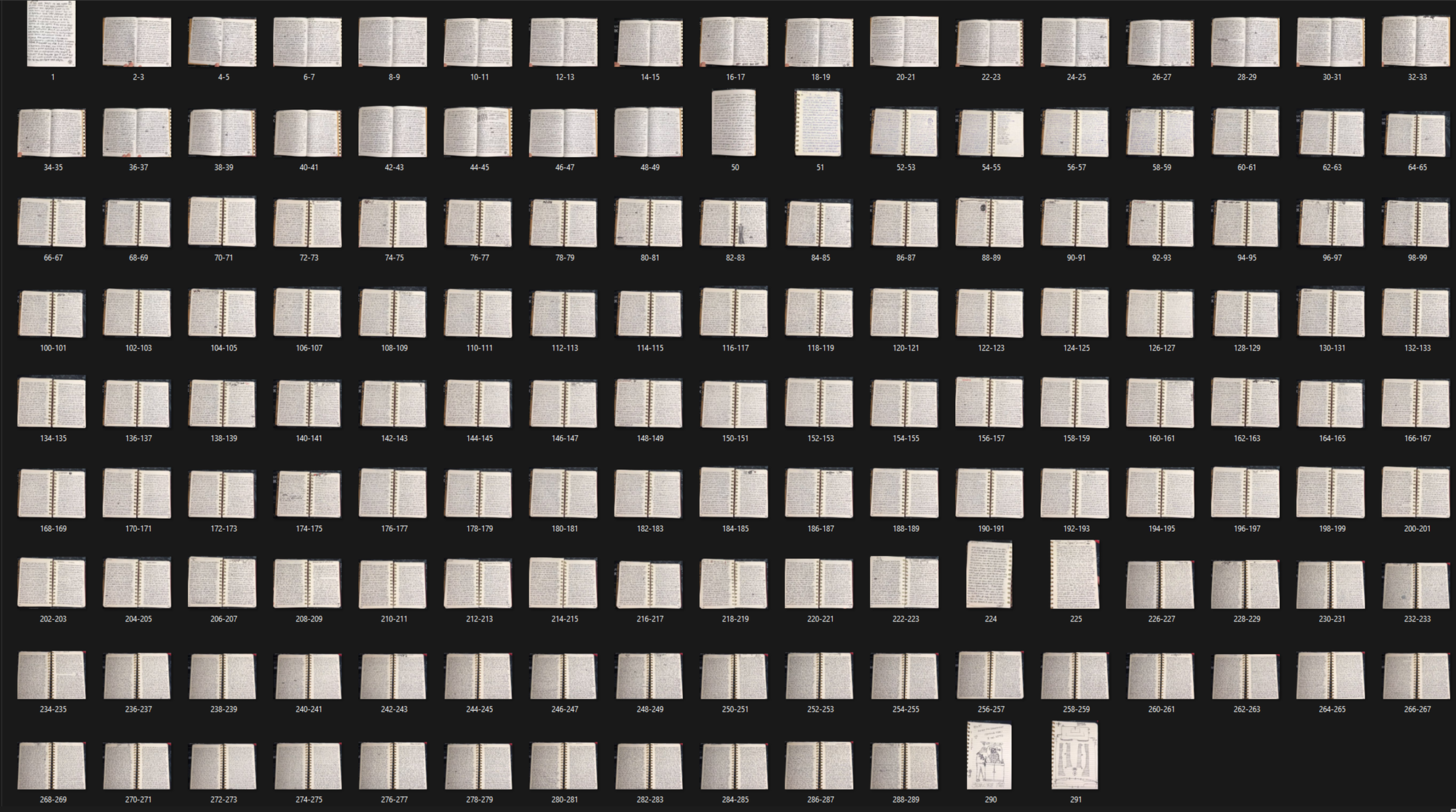
4.1) Part One: Pages 1–75
The first seventy-five pages of the diary reveal the offender’s initial psychological state and thematic preoccupations. These entries establish early grievances (family conflict, social isolation), a fascination with prior school shooters, and an emerging pattern of nihilistic thinking. While not yet fully operational, the subject repeatedly discloses violent ideation and rehearses the meaning of committing mass violence. The offender positions violence as the only way to assert significance in a life otherwise marked by perceived neglect and obscurity.
From the opening entry, the offender signals both the seriousness and compulsive nature of their writing: “I have had thoughts of mass murder for a long time. I am very conflicted with writing this journal. I need to get my thoughts out without getting put on a watchlist haha! This journal is not gonna be organized or easy to read. It will be a brain barf of thoughts.” This passage demonstrates early disclosure of homicidal ideation, coupled with a sense of compulsion (“I need to get my thoughts out”). The early writing indicates detachment and normalization of violent ideation.
Shortly thereafter, the offender recalls the genesis of their fascination with school shootings: “I indulged in every school shooting video I can find. My interest in school shootings started in seventh grade. I remember one day talking to ...[redacted name,] my crush, and another kid. I asked them, if there was a school shooting, what would they do?” This is one of many examples that form an ongoing thread throughout the diary. This example however, allegedly points to the origin of the fixation in adolescence, with a social testing of boundaries by discussing school shootings with peers. That the offender cannot remember their crush’s response but remembers their own question suggests self-centered recall and a fixation on the fantasy itself, rather than social consequences.
Throughout part one, the offender situates their distress in a mixture of family trauma and perceived social invisibility. They write: “I was yelled at, ignored, treated like garbage. I was destined to be nothing. They never saw me, never cared. I have always been far gone.” This highlights a core grievance of neglect and abandonment, which is repeatedly tied to their justification for violence. The offender also begins to articulate admiration for past attackers. In several entries, they list names and express a perverse sense of belonging: “Eric and Dylan did it right. Adam Lanza was a freak, but Sandy Hook is my favorite. Cruz was messy, but he tried. I study them all. They are family, and I am one of them.”
Here, we have one of many examples of how the perpetrator identifies with prior mass shooters as an imagined lineage or “family.” This pathological identification serves as reinforcement and validation of their own intent to carry out a mass shooting. There are regular signs of suicidal ideation. They alternate between fantasies of homicide and self-annihilation: “I want to die. But I also want them to die. Maybe I’ll take us all together. That way they will know my name.” This illustrates the fusion of suicidality and homicidality, a hallmark of extreme risk. The violence is not merely externalized but bound up with the offender’s own wish for self-destruction.
Around page 50, the tone becomes more fragmented. The offender begins using shorter sentences, less coherent phrasing, and intersperses violent fantasies with nihilistic statements: “Nothing matters. No one cares. I will burn it all. Guns, masks, names. Mom won’t save me. I am already gone.” The references to “Mom” recur throughout the diary. At this stage, “Mom” appears as both a literal figure and a symbolic justification for decisions (“Mom won’t save me”), suggesting displaced anger toward parental figures and possibly a dissociative externalization of responsibility. Toward pages 60–75, the offender openly fantasizes about tactical preparations, though not yet with specificity. They describe masks, weapons, and a desire for spectacle: “I imagine putting on the mask. Feeling nothing. Walking through halls like a ghost. They will scream and I won’t hear them. I will be famous. I will finally be seen.” This is fantasy rehearsal—the offender imagines both the sensory experience and the social outcome of the attack. Violence is explicitly framed as a path to recognition: “I will finally be seen.”
4.2) Part Two: Pages 76–150
This second section of the diary captures the offender’s transition from obsessive ideation into operational fantasy and proto-planning. The tone becomes colder, more fragmented, and overtly violent compared to part one. References to family grievances, suicidal ideation, and violent fantasies continue, but here they crystallize into tactical rehearsal, fixation on role models, and repeated declarations that violence is the only way to achieve meaning and not be forgotten.
By page 80, the offender’s nihilistic worldview becomes more explicit: “There is no escape. I am forced to do this. I can’t keep pretending I’m normal. This is the only way out.” They regularly demonstrate a fatalistic, coercive self-justification. Violence is reframed as inevitable and compulsory, removing personal responsibility and heightening risk. Around pages 90–95, the offender develops tactical imagery: “I picture myself walking into the church. Door 19. Hallway access. Everyone trapped inside. It is a death trap.” We see the early operational mapping: the offender begins to assess entry points, chokepoints, and crowd density.
At the same time, the offender continues to idolize past attackers, explicitly aligning themselves with their imagined approval: “Lanza is my favorite. I think about him every day. I know he would understand me. Cruz too, he tried. We are brothers.” The perpetrator has identifies with prior shooters, framed as familial bonds. This reinforces grievance as the attacker aligns their grievances with their favourite attackers and connects their act to a lineage of violence.
By pages 100–110, the offender blends fantasy with suicide planning: “I don’t want to live. But I don’t want to die for nothing either. If I kill them, I’ll die with glory. They’ll remember my name forever.” Here, the fusion of suicidality and homicidality is unmistakable. Survival is not anticipated; instead, the attack is imagined as a final performance and a form of escapism from responsibility. Later entries (pp. 120–130) show increased cognitive fragmentation. Sentences shorten, phrasing becomes chaotic, and violent references spike: “Masks. Guns. Mom noise. Burn them all. No one survives.” This example of incoherent phrasing is one of many in the diary, which might reveal an individual writing in crisis, struggling with emotions and escalating obsession with violent themes. The recurring invocation of “Mom” continues, suggesting unresolved maternal grievance functioning as both symbol and justification for their violent act.
By pages 140–150, the offender writes in checklist-style fragments rather than narrative: “Shotgun. Ammo. Police two minutes. Mask on. Dead. Famous.”
we see the perpetrator transition to operational rehearsal, with attention to timing (police response), equipment, and end-state (suicide/fame). This is a pattern that repeats itself and evolves as the plan and target changes and forms. This second part represents an escalation of the pathway to violence:
• Grievance to inevitability: Statements like “There is no escape, I am forced to do this” reveal fatalistic justification and the removal of perceived alternatives.
• Operational rehearsal: Entries move from abstract ideation to concrete rehearsal of locations, weapons, timings, and victim entrapment.
• Idolization of prior attackers: The offender entrenches their identification with Adam Lanza, Nikolas Cruz, and others, describing them as family. This points to the shooter fandom alignment.
• Fusion of homicide and suicide: By mid-stage, the offender embraces death as an integral part of the plan.
Between pages 76–150, the offender evolves from fascination to committed planning. They explicitly name targets, sketch tactical access points, and idolize prior attackers as guiding figures. Their language reflects both mental decline and premeditated violence, with suicide framed as the inevitable conclusion. Violence itself is the message: no ideological framework is articulated, no political aim is central. Instead, nihilism, grievance, and a craving for notoriety drive the planning forward.
4.3) Part Three Pages 151–225
Pages 151 through 225 reflect the offender’s spiraling deterioration, escalation of violent fixation, and crystallization of attack planning. This stage marks a point of no return in the offender’s thinking: suicidal intent fuses with homicidal obsession, tactical rehearsal becomes concrete with cold checklist-like preparation underscoring their acceleration towards violence. By page 155, the offender openly acknowledges their perceived psychological collapse: “I am broken. I won’t last long. I am already gone.” This self-description is common in part three and signals extreme hopelessness and a dissociative detachment from reality. The diary no longer reads as reflective but as fatalistic.
Around pages 160–170, tactical considerations dominate: “I trained to find the fastest police scanner. Two minutes between shots and arrival. If I am quick, I can take them all before the cops.” This is an example of the perpetrator's operational rehearsal, with specific timings and reliance on technology. On page 172, the fixation on weaponry becomes central: “Shotgun. Slugs. Buckshot. Load them right. Reload fast. Kill anyone catching the corners.” The detail here indicates weapons knowledge, tactical positioning, and rehearsal. These are hallmarks of the “planning and preparation” stage of the pathway to violence.
This evolves further by pages 180–190, where the writing is characterized by emotional volatility and nihilistic declarations: “Nothing matters. No God. No future. I will burn them all. My name forever. That is all.” The perpetrator drifts further into nihilism with legacy-seeking motivation. The offender sees annihilation of others and self as the only meaningful act. At the same time, the writings show continued idolization of past attackers: “Adam Lanza speaks to me. Cruz tried, I will finish. Harris and Klebold will know me. We are the same.” The offender is now not only referencing but imagining communication and continuity with prior shooters, reflecting delusional identification.
From pages 200–215, the diary entries become shorter, written like directives or commands: “Mask on. Walk in. Shoot first. No talking. Famous.” “Mom knows. Mom guns. Mom plan. I am the plan.” The recurring “Mom” motif now merges with operational rehearsal, suggesting that the maternal figure (real or symbolic) is bound to the violence itself. The offender perceives themself as the embodiment of the plan, dissolving the boundary between self and act. By page 220, suicidal finality dominates: “I don’t come back. I don’t live after this. That is the point. Dead and famous.” This illustrates acceptance of suicide as the operational end-state and removes any possibility of deterrence through fear of death or consequence.
Between pages 151–225, the offender crosses into full operational readiness. They mention tactical rehearsals, openly commit to dying during the attack, and situates themselves within a lineage of prior mass shooters. The language is fragmented, nihilistic, and obsessive, reflecting a total collapse of protective factors. At this stage, violence is no longer hypothetical it is framed as inevitable, imminent, and final.
4.4) Part Four: Pages 225–291
The final section of the diary represents the subject’s descent into full operational readiness, fatalism, and self-mythologizing. The earlier oscillation between doubt and desire for intervention has disappeared. What remains is a tightly fixated plan, framed as both an act of violence and a final act of self-annihilation. The subject repeatedly anchors themself to a specific date, August 22, which they call “all that matters.” This fixation marks the point at which abstract ideation transforms into concrete, time-bound planning. They rehearse every element of the attack in their mind, describing it as a “film reel” of movements, aim, breathing, and timing. These immersive rehearsals confirm that the attack is envisioned not only as a fantasy but as a performance to be carried out.
Violence itself is elevated into meaning. The subject makes clear that there is “no escape” and that they are “forced to do this,” collapsing choice into inevitability. This fatalistic framing reinforces the perpetrator's nihilistic worldview: the act has no external justification, no ideological aim, and no symbolic target beyond the violence itself. The church and school references that appear here are described in tactical, dehumanized terms, such as “death trap” and “bodies in the hall.” They are selected not because of ideology but because the setting provides the density of people and anticipated spectacle that fulfills their need for impact. The language shifts toward farewell and self-erasure. Statements such as “I am already dead” and “there’s no turning back, not now, not ever” indicate the fusion of suicidal intent with homicidal drive. Family considerations that occasionally surfaced earlier are absent, replaced by self-mythologizing: “I am the plan.” The perpetrator now sees themselves as inseparable from the attack, embodying it as their only path to recognition.
By the closing pages (p. 281–291), the subject writes as though the act has already occurred, describing both the violence and its aftermath in the past tense. They imagine media headlines, screams, and echoes of gunfire, confirming their desire for both spectacle and legacy. The tone is a mix of resignation and anticipation, blending despair with excitement. Taken together, the collapse of inhibition and the crystallization of commitment demonstrates fixation on a date, detailed tactical rehearsal, concrete targeting, a farewell tone, and fatalism. It confirms that for this subject, violence itself is the message: a nihilistic final act where killing others and dying in the process are inseparable.
Pages 225–230 we see the perpetrator's entrenchment and fixation in their plan to carry out an attack. The subject begins this section with an unambiguous fixation on the attack date. They write, “August 22. That’s all that matters.” The date in later entries shifts to August 27. Elsewhere they note, “I rehearse every moment, my steps, my aim, my breathing. Over and over until it plays like a film reel in my head.” We see further transition from fantasy into mental rehearsal. The date is no longer abstract but has become the fixed horizon around which their thoughts orbit.
The repetitive rehearsal language resembles compulsive rumination, coupled with performance fantasy. The attack is envisioned as both an inevitable act and a staged event. It is about performance and not failing so that they are remembered and can stand in the pantheon of "saints" with their idols. The perpetrator's writing moves into immersive fantasy and legacy-seeking. In these sections, the subject describes visualizing the scene in detail: “I imagine the flashes of light, the screams, the echo of shots in the walls.” They also write, “I imagine headlines after, calling my name.” This shows explicit recognition-seeking and clout chasing placing media attention as a central motivator. At the same time, fatalistic language emerges: “There’s no escape, I am forced to do this.” Here the subject collapses choice into inevitability, a shift from ambivalence seen earlier in the diary to framing the attack as destiny. This reflects both suicidal ideation (“I cannot go back”) and homicidal intent fused together.
Pages 241–250 move toward operational rehearsal. The perpetrator notes, “I practice with the weight in my arms, I think of the reload, the steps, the timing between shots.” They fixate on police response: “Two minutes, maybe less. I can hear the sirens before they come.” These passages show rehearsal of logistics and tactical sequencing. The specificity around reload timing and police arrival signals progression into pre-attack operational planning. The perpetrator demonstrates narrowing cognition, where the subject filters all perception through preparation for violence. This evolves into the shooter's approaching finality and self-mythologizing as they write, “There is no turning back. Not now. Not ever.” Elsewhere, “It is carved into me. I can’t back down.” These excerpts demonstrate crystallization of commitment. The attack is now treated as identity-defining, with language such as “I am the plan” and “I am already gone.” By this point the perpetrator shows full adoption of the violent alter ego as they dissociate their self-concept into a mythologized figure of violence, both dehumanizing themselves and elevating the act as their legacy.
Pages 261–270 display both direct suicidal intent and subtle leakage. The perpetrator writes, “I want someone to stop me, but they won’t. No one sees it.” They also note, “I am finished. I will end it myself if they catch me.” This duality, their desire for intervention coupled with fatalism, shows an ambivalence of last-resort for this attacker. The wish for recognition and rescue remains, but their conviction that they are invisible to others provides justification for their planned violence. Leakage indicators here include references to being “too obvious” and fantasizing about someone finding the journal. At this point in the diary the subject references specific target concepts: “The church is a death trap,” “The kids, the school, the bodies in the hall.” they link these to tactical imagery: “Door nineteen, hall access, choke points.” This represents the most concrete targeting language in the diary. Schools and churches are explicitly framed as operational spaces. As we progress towards the final pages of the diary the perpetrator adopts a farewell narrative. They write, “I keep telling myself, I am already dead.” Another line reads, “They will remember me when it’s done.” The tone shifts between aggression (“I want to kill so many kids”) and resignation (“I am nothing now, this is the only way.”). This fusion of suicidal despair and homicidal rage represents the final stage of escalation for this individual. Protective factors such as family consideration, which were intermittently present earlier, are now entirely absent. The act is framed as both performance and obliteration of the self. The final entry reads like a conclusion a combination of resignation, inevitability, and imagined aftermath. They frame the act as validation of their lifelong invisibility and despair, writing as if it has already occurred.
Part Four of the diary shows the final stage of the subject’s escalation across the final 96 days before their attack. Early ambivalence is replaced by fixation on a single attack date, immersive rehearsal of tactics, and explicit suicide/homicide fusion. Excerpts show detailed visualization of violence (“flashes of light, screams, echo of shots”), rehearsal of tactical steps (“reload, timing between shots”), fixation on targets (“the church is a death trap,” “kids, the school”), and fatalistic resignation (“there is no escape, I am forced to do this”).
This section confirms full commitment to violence as identity: the subject mythologizes themselves (“I am the plan”), erases protective considerations, and frames violence as both inevitable and necessary. The farewell tone of the final pages confirms intent to die in the act, either by suicide or by confrontation with law enforcement.
5) Diary Assessment
5.1) Grievances
The subject’s grievances are multi-layered. On the personal level, they fixate on family dysfunction, repeatedly describing their parents as broken and expressing hatred toward their stepfather. They tie their identity grievance to their Mexican heritage, describing themselves as broken because of it, which reflects internalized stigma and identity conflict. Their stepfather is portrayed as a figure of hostility, while their mother is alternately a source of guilt and justification.
From the earliest entries, the subject frames themselves as abandoned and unseen. They write that their family “loves me in some way but I hate them,” reflecting both ambivalence and deep resentment toward their parents. Socially, they express resentment toward peers and former friends, describing themselves as invisible, forgotten, or dismissed. At the existential level, they express grievance over obscurity and lack of meaning, fearing they will “disappear as a loser.” Violence is consistently framed as a means of resolving these grievances by creating legacy and notoriety.
The subject extends these grievances beyond personal life into social and ideological domains. They call their peers “NPCs” and “parasites,” dehumanizing language that supports externalization of their anger. They frame society as hostile and meaningless. The perpetrator refers to immigrants, Zionists, and Jewish communities as symbolic enemies. At one point, they write of synagogues as possible targets. These grievances provide both the emotional fuel and the external targets for their planned attack. They transform personal pain into generalized hatred, allowing the subject to justify indiscriminate violence as both vengeance and recognition.
The manifesto reveals that the subject struggles with their identity. This identity conflict emerges repeatedly in fragmented, ambivalent, and sometimes hostile terms. At times, the subject expresses longing for recognition of their gender identity and refers to themselves with female associations, while at other points they reject or deny this aspect of themselves. The oscillation between self-acknowledgment and rejection suggests profound internalized conflict, possibly rooted in stigma, family rejection, or fear of societal judgment.
This unresolved identity conflict appears to exacerbate the subject’s broader sense of alienation. Family dysfunction, rejection by peers, and experiences of abandonment are compounded by difficulties in affirming their identity. Instead of finding support, the subject frames this aspect of self as another reason they are broken, misunderstood, or excluded. The incongruence between their identity and lived experience becomes another grievance: internalized as self-hatred and projected outward into rage at the world.
The writings suggest that this identity struggle contributes to their nihilistic outlook. The subject describes themselves as trapped, with “no escape” from the pain of living as they are. Gender identity becomes entangled with the themes of inevitability, fatalism, and compulsion to act. In this framing, violence is not only a response to social rejection but also a way of obliterating the part of themselves they cannot reconcile.
It is important to note that their identity is not presented in a coherent or affirming way but appears fragmented, confused, and fused with self-loathing. There are indications of shame and possible experiences of external hostility, though these are not detailed explicitly. From this perspective, the unresolved identity crisis amplifies the subject’s vulnerability to suicidal ideation and grievance formation. It feeds into their perception of being fundamentally unaccepted by family, peers, and society, intensifying the push toward violent expression.
5.2) Trauma and Family Dynamics
According to the subject’s writing, their grievances are grounded in a history of trauma. They recall repeated childhood experiences of yelling, rejection, and of abandonment within their family, of being “yelled at, ignored, treated like garbage,” particularly linked to their stepfather. They interpret as evidence that they were “destined to be nothing;” framing these experiences as foundational to their hatred and alienation. This language highlights the author's perceived or real adversity that was internalized into a self-concept of brokenness and invisibility. The perpetrator recalls moving through life “like a ghost,” unseen by peers and adults. These experiences deepen their narrative of being forgotten and worthless.
They reference institutional interventions, including psychiatric hospitalization and school discipline, but they are framed as traumatic experiences. Instead of perceiving these as protective, the subject interprets them as further evidence of rejection. Hospitalization and treatment are described in terms of punishment, and they curse the medications and programs as failures. Viewing offered supports as punitive betrayal deepens their mistrust of authority and professionals, leaving them with no perceived avenues for help.
The subject intermittently references their identity but it is not central, rather these references are fragmented and laced with self-loathing. At one point they write, “I am a girl, but broken, no one sees it. " In other places, they reject or distance themselves from this aspect of self, expressing disgust and shame. This oscillation between acknowledgment and denial reveals deep internalized conflict. Rather than finding affirmation, their gender identity becomes another source of grievance. They frame themselves as fundamentally unaccepted by family, peers, and society. The lack of external recognition or support appears to exacerbate feelings of invisibility and self-hatred. This conflicted identity fuels a broader narrative of brokenness and inevitability, contributing to the fatalistic conviction that violence is the only possible solution to finally being seen. Together, these experiences constitute chronic relational and psychosocial trauma that likely shaped their distorted worldview.
5.3) Fascination with Violence
Violence is not peripheral but central to the subject’s writings. They document consuming “every school shooting video I can find,” and immerse themselves in the details of prior attacks. Columbine, Sandy Hook, and Christchurch are invoked repeatedly, with Adam Lanza and Sandy Hook described as their “favorite.” The subject categorizes perpetrators into “winners” and “failures,” aspiring to be remembered as a “winner” among shooters. They construct a symbolic family of killers, writing about wanting to be “remembered with them, studied like them.” This demonstrates clear identification with prior attackers, showcasing the contagion effect of the true crime community.
The fascination deepens into tactical rehearsal: details about weapons (shotguns and AR-style rifles), ammunition choices, tactical stances, and imagined sensory experiences “the echo of shots in the walls, the screams, the flashes.” Violence is not only imagined but practiced through mental simulation, reinforcing their trajectory towards attack readiness.
The subject idolizes a wide range of prior attackers in their diary. They explicitly name Adam Lanza, Eric Harris and Dylan Klebold, Nikolas Cruz, Elliot Rodger, Brenton Tarrant, Dylann Roof, Stephen Paddock, James Holmes, and Vladislav Roslyakov. The perpetrator categorizes attackers into “winners” and “failures,” framing themself as aspiring to the successful lineage. They imagine receiving symbolic approval and being gifted weapons from past atackers and repeatedly refers to them as part of their “family.” Columbine, Sandy Hook, and Christchurch are described with particular reverence, with Sandy Hook called their “favorite” attack.
5.4) Nihilism and Fatalism
The subject repeatedly insists that violence is inevitable: “There is no escape, I have no choice but to do this,” and elsewhere: “I am forced to act, it is carved into me.” This language is fatalistic, stripping away the concept of agency and portraying violence as destiny. Their worldview is nihilistic: life is meaningless, the self is broken, and society is hostile. Within this frame, violence becomes both proof of existence and the final act of self-erasure. Suicide is consistently integrated into the plan “I’m already dead. August 22 will only prove it.” This framing fuses nihilism with suicidal intent, making deterrence or rehabilitation almost impossible.
The nihilism interacts with other domains: trauma, identity conflict, and a fascination with violence, to create a worldview where destruction is the only way to matter. Violence is not a choice but a symbolic inevitability, stripping away any remaining protective factors.
The subject blends this nihilism with grievance and sees themselves as forced into violence by society’s failures: by broken family ties, abandonment by peers, and rejection by institutions. In their framing, violence becomes both a punishment of others and an expression of their own resignation. This nihilistic stance has two key effects. For one, the subject is not constrained by fear of consequences. With death as their expected outcome, deterrence mechanisms lose effectiveness. And two, it intensifies the symbolic dimension of their planned violence. The act is meant to prove that life has no value and that destruction is the only lasting mark that they can make.
5.6) Self-Harm and Suicidality
The subject describes self-harm as both ritual and affirmation. In one entry, they write: “Every cut, every drop of blood is proof I exist.” This reveals parasuicidal behavior where pain and bleeding functions as confirmation of identity in the absence of external validation. Self-harm is framed as a coping strategy against feelings of invisibility, but also as a rehearsal for self-destruction. Suicidal intent is present throughout. The perpetrator repeatedly frames themselves as already dead: “I’m already dead. August 22 will only prove it.” Unlike passive ideation, this is an integrated outcome. The attack is imagined as both homicide and suicide, with self-destruction inseparable from the violent act. This erases self-preservation as a protective factor. This parasuicidal framing, where the attack itself is both a homicide and a suicide, removes barriers to violence and reflects a collapse of self-preservation. The link between self-harm and outward-directed violence is a key indicator of risk.
5.7) Escalation Timeline Over Ninety-Six Days
The diary reveals a clear and escalating trajectory across three stages. The first entries are dominated by despair and alienation. They describe themselves as “conflicted” while writing but also compelled to get their thoughts out. They reflect on childhood, rejection, and self-hatred, often in long, reflective passages. Violence is present as fascination, but not yet as operational planning.
As the diary progresses, the perpetrator's focus shifts toward mass shooters. They write of watching “every school shooting video I can find,” and ranking past attackers as “winners” or “failures.” The tone shifts from despair to comparison as they begin imagining their place among the attackers. Here, identity as a “shooter” begins to fuse with personal grievance, creating a new framework for selfhood.
In the later entries, the language becomes urgent and operational. They name a specific date, rehearse details, tactical stances, reloads, choke points, and describe sensory elements: “I imagine the flashes of light, the screams, the echo of shots in the walls.” These passages are checklist-like, resembling preparatory notes rather than reflections. The final entries read as farewell statements, imaging there is no turning back in the formulation of self that they've constructed over the past 96 days.
This progression follows ideation, research, planning, and preparation. The compressed 96 day timeline demonstrates rapid escalation with no evidence of external interruption or protective stabilization.
5.8) Motivation and Ideology
The writings make clear that the subject’s driving motivation was not political or ideological, but rather driven by recognition, legacy, and the existential need to matter. Their 'ideology' is a hybrid of nihilistic violence and grievance-driven hatred. They frame themselves as invisible, unwanted, and already dead, and repeatedly seek a way to transform that invisibility into permanent visibility. The attacker’s primary motivation is a drive for recognition and legacy. Throughout their writings they repeatedly state they don't want to “disappear as a loser”. The shooter writes: “I want to be remembered with them [referencing the shooters of the past], studied like them.” This demonstrates that the attack is not conceived as a tactical strike to achieve an external goal but as a symbolic act designed to inscribe their name alongside previous perpetrators.
The diary does contain ideological language: antisemitic remarks, hostility toward Zionists, disdain for immigrants, and a generalized dehumanization of society. At one point they explicitly name synagogues as possible targets, while in other passages the perpetrator lists schools, malls, concerts, airports, and churches. However, the variability of targets and the lack of sustained ideological focus demonstrate that these elements were not core motivations. They function instead as interchangeable symbols of a society the attacker despises. What mattered was not the nature of the target, but the fact that it could provide a stage for spectacle. The incoherence of the ideologies is not the point, it is layered on top of personal grievances to give their plan a sense of legitimacy within the fandom they are a part of. The attacker says so themselves, that there is no point, the violence and destruction is both the means and the message.
This interchangeability is crucial. Unlike ideological extremists, who select targets to advance specific political or doctrinal goals, the subject treats targets as props in a performance of destruction. Their attack planning lacks the hallmarks of political or religious terrorism. Instead, it follows the trajectory of nihilistic violent extremism, where the act and the violence itself is the message. The perpetrator writes of their compulsion with fatalistic inevitability: “There is no escape, I have no choice but to do this,” and “I am forced to act, it is carved into me.” These statements situate violence as destiny, not choice. The meaning of the attack lies in its very execution, not in what is communicated afterwards. The subject is not attempting to persuade, convert, or build a movement. They are simply attempting to immortalize themselves through annihilation.
The admiration for previous attackers reinforces this performative framework. The perpetrator's legacy depends not on changing the system but on being studied, archived, and remembered. The diary itself serves this function: it is a self-authored artifact of legacy, intended to be found, read, and analyzed, just as the shooter consumed the manifestos of others. This is self-directed violence, the target is irrelevant, the ideology superficial, and the tactical elements are all performative and subservient to the goal of being recognized through mass violence. In this sense, violence is not a means to an end, violence is the end. It is both the message and the medium through which the perpetrator seeks to transform invisibility into permanence.
While the subject’s writings are dominated by risk factors, there are fleeting signs of ambivalence. They occasionally expressed a desire for someone to notice and intervene, hinting at a residual wish to be stopped. They also acknowledged their family’s love, writing that “they love me in some way,” though they immediately followed this with resentment. These weak protective factors were overwhelmed by the intensity of the attacker's grievances and fatalistic worldview. Importantly, the shooter consistently rejected therapy, medication, and institutional supports, framing them as failures or betrayals. This resistance eroded even the minimal protective buffers available.
5.9) Family, Peers, and Support Networks
The subject’s relationship with their family is deeply conflicted. They acknowledge that their family “loves me in some way,” but frequently follows with expressions of hatred. Their stepfather is framed as a source of anger and hostility. Their mother occupies a paradoxical role: she is simultaneously a figure of guilt, love, and justification for their planned actions. This ambivalence fuels both grievance and identity disturbance. Peers are described as betrayers. The perpetrator names former friends with longing, but frames their departure as abandonment. Nostalgia for lost friendships reinforces their sense of invisibility, while dehumanization allows them to redirect anger outward.
The diary contains references to psychiatric care, therapy, and medications. The subject writes of being hospitalized and expelled, framing these experiences as punishment. They curse therapy and programs, calling them failures. The shooter describes medication as useless, another betrayal. Instead of perceiving these as interventions, they interpret them as rejections that confirmed their brokenness. This consistent rejection of practitioners reveals a collapsed therapeutic alliance and demonstrates resistance to external help, leaving the attacker isolated in their trajectory toward violence.
The writings reveal multiple maladaptive behaviours. They engage in catastrophizing, stating that they are “already dead” and that there is “no escape.” Depersonalization is evident in the way the perpetrator interprets peer rejection as evidence that they are invisible and worthless. They employ dividing shooters into “winners” and “failures” with no middle ground. Externalization of blame is constant: family, peers, society, and immigrants are all framed as causes of their suffering. These cognitive distortions created a rigid framework where violence became the only perceived solution.
The subject idolizes Adam Lanza, Eric Harris, Dylan Klebold, Brenton Tarrant, and others. They explicitly call Sandy Hook their “favorite,” linking Lanza’s act to their own aspirations. Columbine is referenced mythically, as the origin point of school shooter culture. Christchurch is admired for its spectacle, while the Columbine shooters are admired for their notoriety. The perpetrator is constructing a scoreboard where they hope to earn a place among those they admire. These figures provide both tactical models and symbolic kinship, reinforcing their self-identification as a future attacker.
They have fragmented self-concepts, and demonstrate self-destructiveness through self-harm and suicidal ideation. They further possess a narcissistic hunger for recognition and legacy which is fused with nihilism, creating a need to destroy in order to matter. Dissociative themes indicate detachment and possible depersonalization, the diary writer demonstrates unstable emotional states with poor reality testing and a desire to act out.
5.10) Tactics, Techniques, and Procedures (TTPs)
The writings demonstrate clear operational thinking. The shooter repeatedly references firearms, particularly shotguns and AR-style rifles, and discusses ammunition types to maximize lethality. They practices or imagine tactical stances, headshot versus body targeting, and reload drills. The perpetrator mentions armor and protective equipment. Venue selection includes schools, churches, synagogues, concerts, malls, and airports, all identified as “target-rich environments.” They consider choke points, entryways, and police response times, indicating surveillance and rehearsal of attack scenarios. They also reference explosives and incendiary devices, describing experiments with firebombs and fantasizing about combining them with firearms. Finally, they consistently describe suicide as the operational end state, either by their own hand or by confrontation with police, making capture avoidance part of the procedure.